Design Nomenclature / Digital Model Making
Shader
Also called material, shader graph, material graph
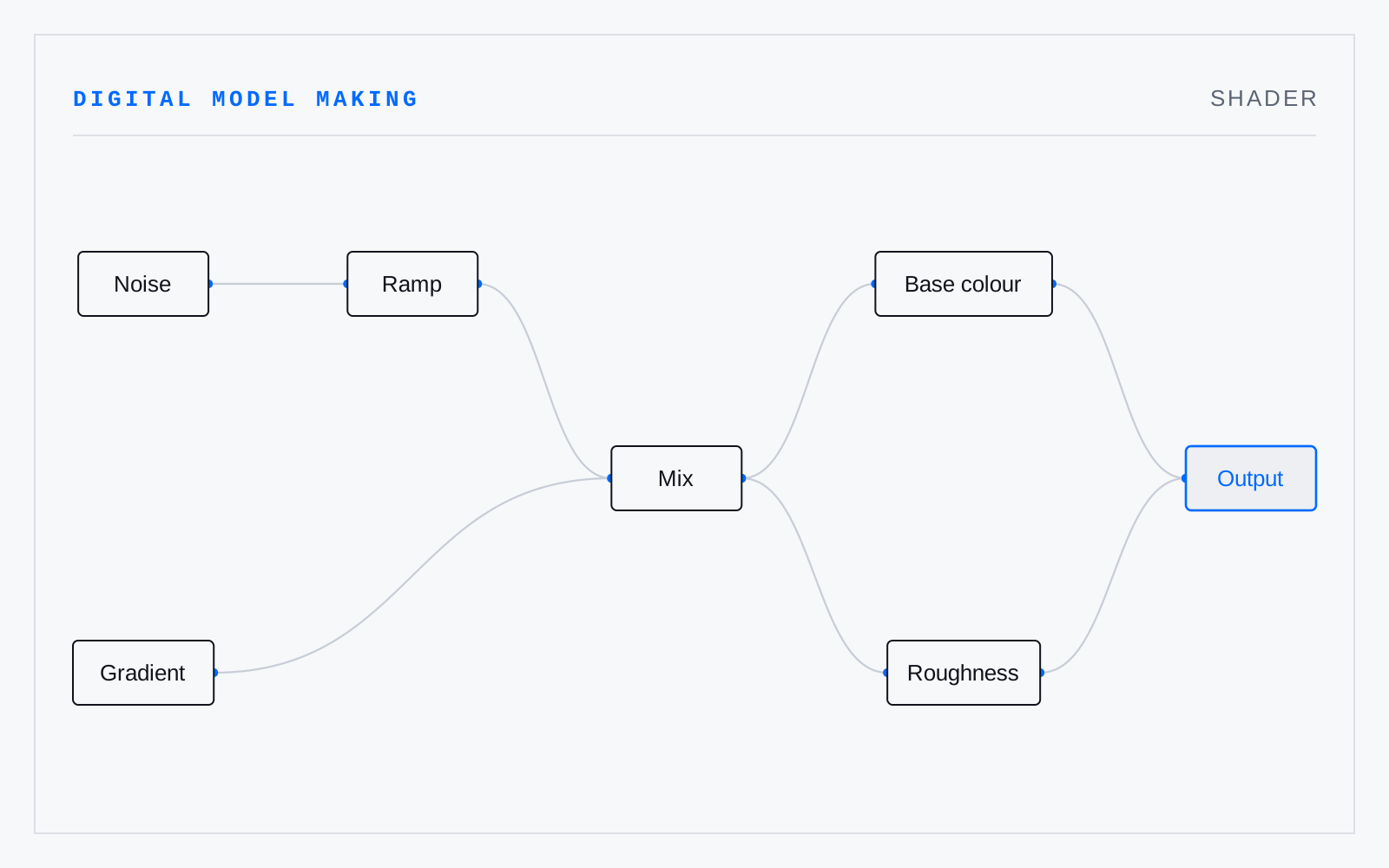
A program run per vertex or per fragment that returns a value — usually a colour, sometimes a position, a depth, or an arbitrary buffer. A material is the authored asset configuring one. Node graphs are a visual editor over the same code: the graph compiles, and its execution model is still per-pixel and parallel.
In practice
Designers say “material” and mean the whole look; engineers say “shader” and mean the program. In node-based texturing tools a material is a graph that outputs maps, and no shader runs until export.
Not to be confused with
- Texture BakingPrecomputing a result into a texture indexed by UV, so it is looked up at runtime rather than evaluated. Anything can be baked: lighting, occlusion, curvature, a procedural graph's output, the surface of another mesh. What you buy in cost you pay in flexibility — the result is welded to that geometry and that light.
- RasterizationTurning geometry into pixels by projecting each triangle to screen space and filling the pixels it covers, with visibility settled by a depth buffer. Cost scales with triangles and pixels, not with light paths — which is why it runs at frame rate, and why every optical effect must be faked or traced separately.