Design Nomenclature / Digital Model Making
Rasterization
Also called raster rendering, scanline rendering, real-time rendering
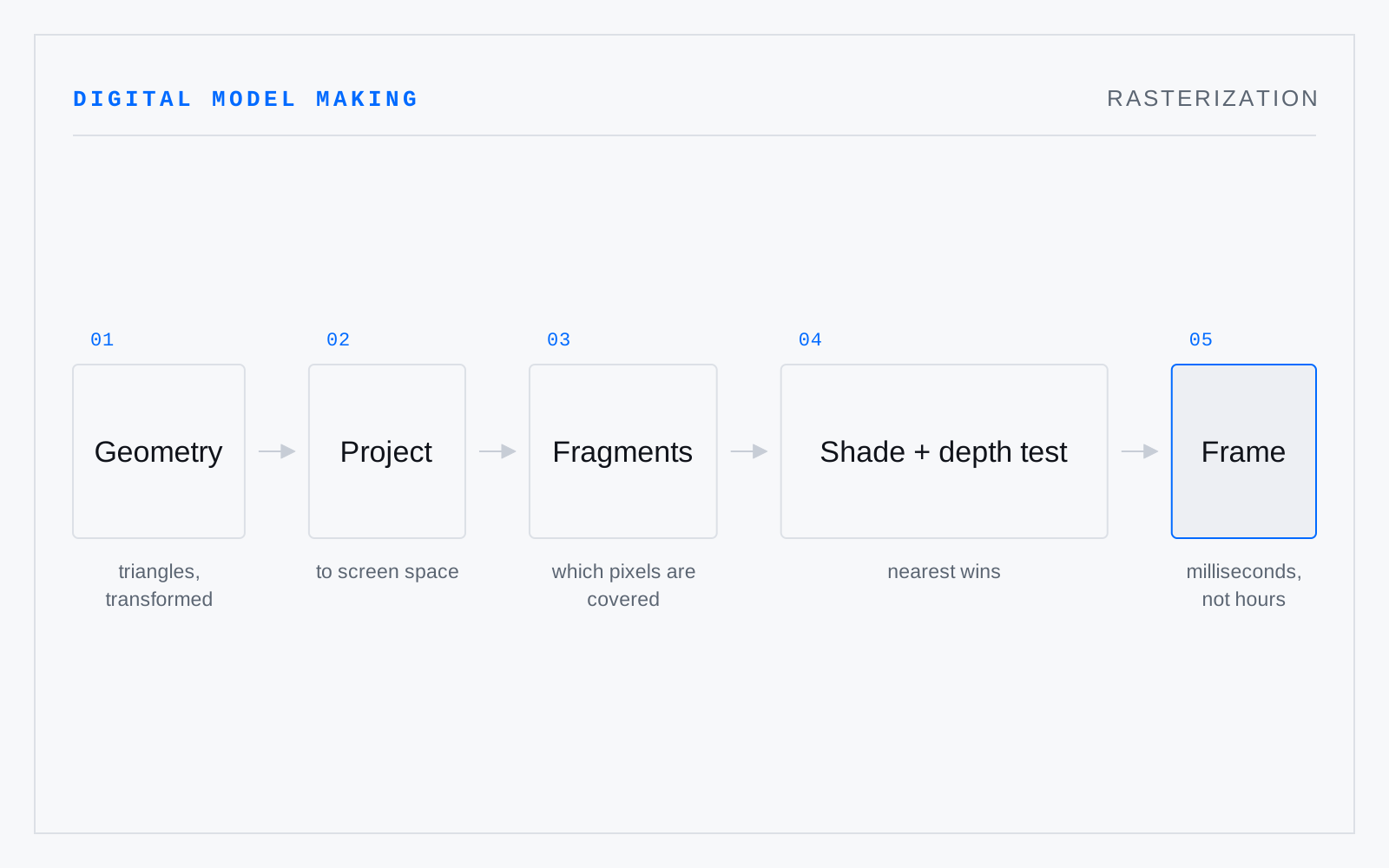
Turning geometry into pixels by projecting each triangle to screen space and filling the pixels it covers, with visibility settled by a depth buffer. Cost scales with triangles and pixels, not with light paths — which is why it runs at frame rate, and why every optical effect must be faked or traced separately.
In practice
Nobody says “rasterization” in a room. They say “real-time”, or they name the engine. The word only surfaces when someone is contrasting it with ray tracing.
Not to be confused with
- Ray tracingHistorically, Whitted's 1980 method: trace one ray per pixel, recurse into the mirror and refraction directions, and fire shadow rays at point lights. It resolves specular transport and nothing else — no diffuse interreflection, and no soft shadows without extending it.
- RasterAn image stored as a grid of samples. It has no notion of what it depicts — a letterform in a raster is not a letter, it is the pixels a letter left behind. Scaling means resampling, and resampling invents data. Cost is fixed by dimensions regardless of content, which is why photographs are raster.