Design Nomenclature / Digital Model Making
Raster
Also called bitmap, pixel image, raster image
An image stored as a grid of samples. It has no notion of what it depicts — a letterform in a raster is not a letter, it is the pixels a letter left behind. Scaling means resampling, and resampling invents data. Cost is fixed by dimensions regardless of content, which is why photographs are raster.
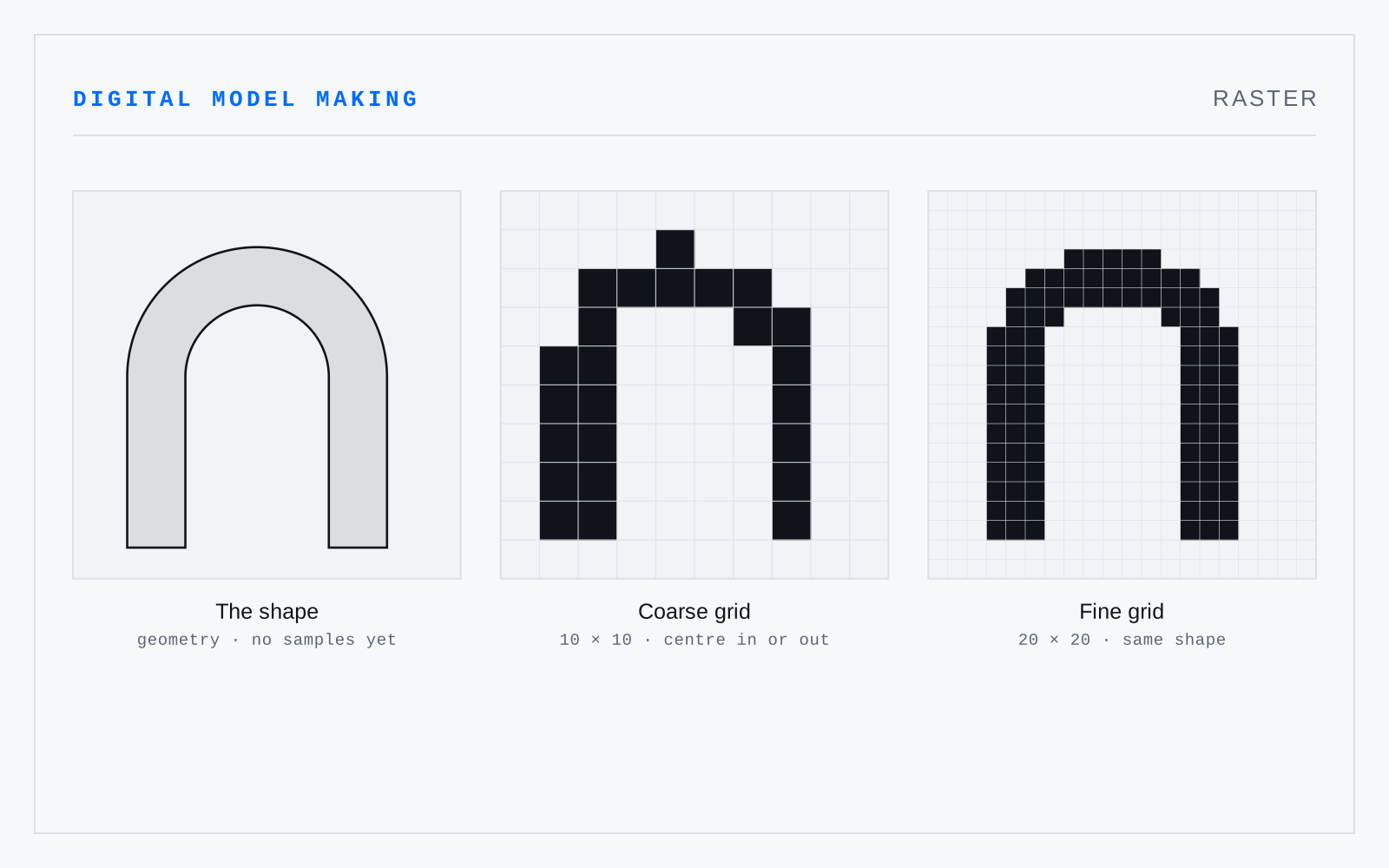
In practice
“Bitmap” strictly means one bit per pixel. Everyone uses it for any raster image, and the .bmp file extension cemented the confusion permanently.
Not to be confused with
- VectorAn image stored as geometry — paths with control points, fills, strokes — evaluated at output time, and so resolution-independent by construction. Not automatically better: gradients, blurs, and photographic detail are expensive or impossible, and complexity costs render time. A font is vector; its appearance on a screen is not.
- RasterizationTurning geometry into pixels by projecting each triangle to screen space and filling the pixels it covers, with visibility settled by a depth buffer. Cost scales with triangles and pixels, not with light paths — which is why it runs at frame rate, and why every optical effect must be faked or traced separately.
- ResolutionAmbiguous by use. The word names pixel dimensions (4096 by 4096), sampling density (300 ppi), and sometimes an output size in inches — three different quantities, of which any two determine the third. An image has no physical size until a density is chosen, so “high resolution” is not a property of a file.