Design Nomenclature / Digital Model Making
PPI
Also called pixels per inch, pixel density, pixel pitch
Image samples per inch at a stated reproduction size, or the physical pixel pitch of a display. It describes a relationship between a file and an output, never the file alone: a 300 ppi image is 300 ppi only at the size it was specified for. Print it twice as wide and it is 150.
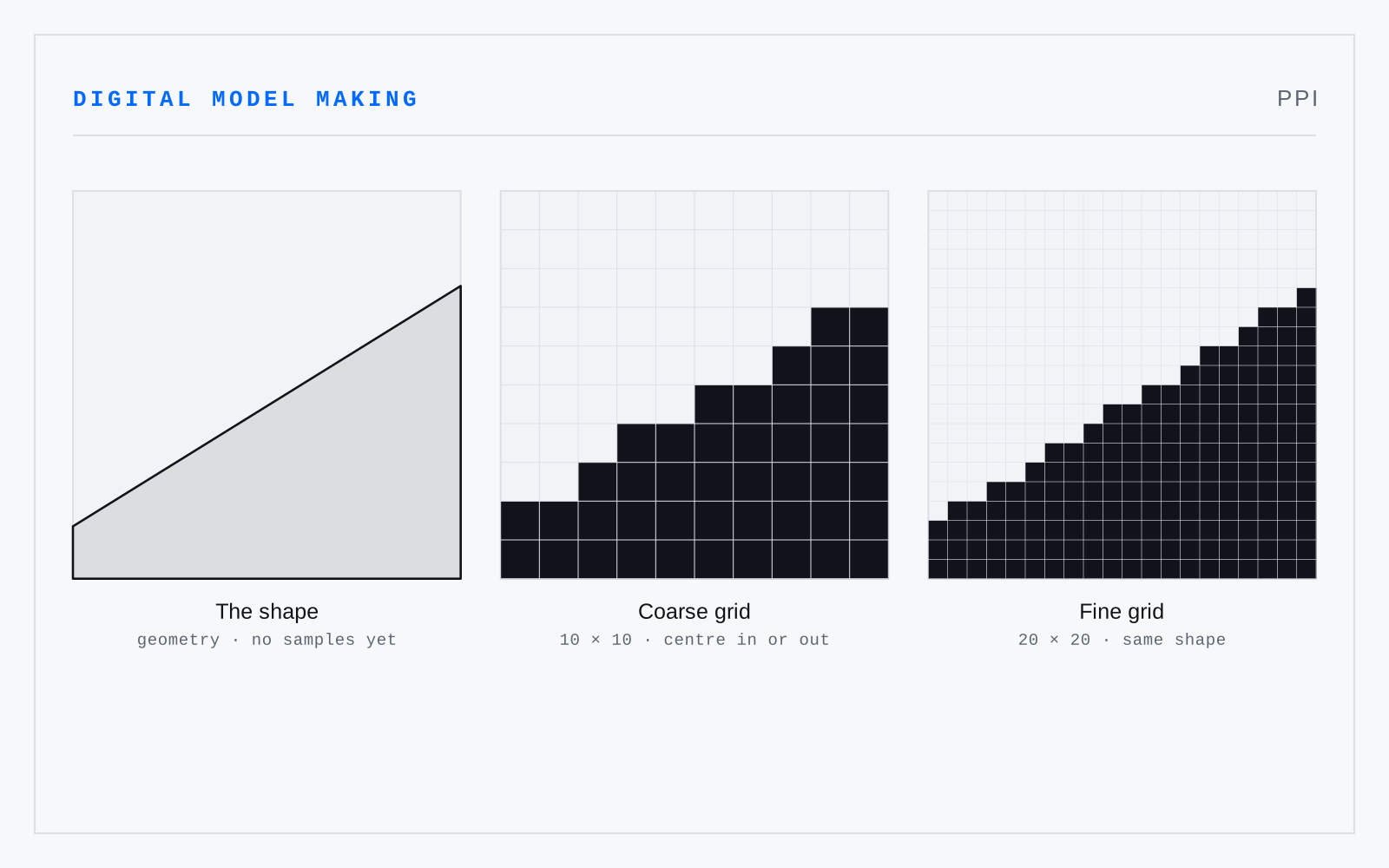
In practice
Screen ppi and image ppi are different measurements sharing a name. And a device's CSS pixel is not its hardware pixel — that ratio, not ppi, is what your layout actually sees.
Not to be confused with
- DPIDots of ink per inch that a printing device can place. It describes hardware. A platesetter at 2400 dpi renders a 150-line halftone screen; an inkjet lays several dots per image sample. It is a property of an output process, not of a file — a file's dpi tag is only a suggested reproduction size.
- ResolutionAmbiguous by use. The word names pixel dimensions (4096 by 4096), sampling density (300 ppi), and sometimes an output size in inches — three different quantities, of which any two determine the third. An image has no physical size until a density is chosen, so “high resolution” is not a property of a file.
- Texel DensityTexture pixels per unit of surface, quoted as px/cm or px/m. It is the one thing that makes texture resolution consistent across an asset: two objects at the same density read as the same material; at different densities they read as different budgets. Set it as a project standard, not per model.