Design Nomenclature / Digital Model Making
Texel Density
Also called texel ratio, pixels per unit, TD
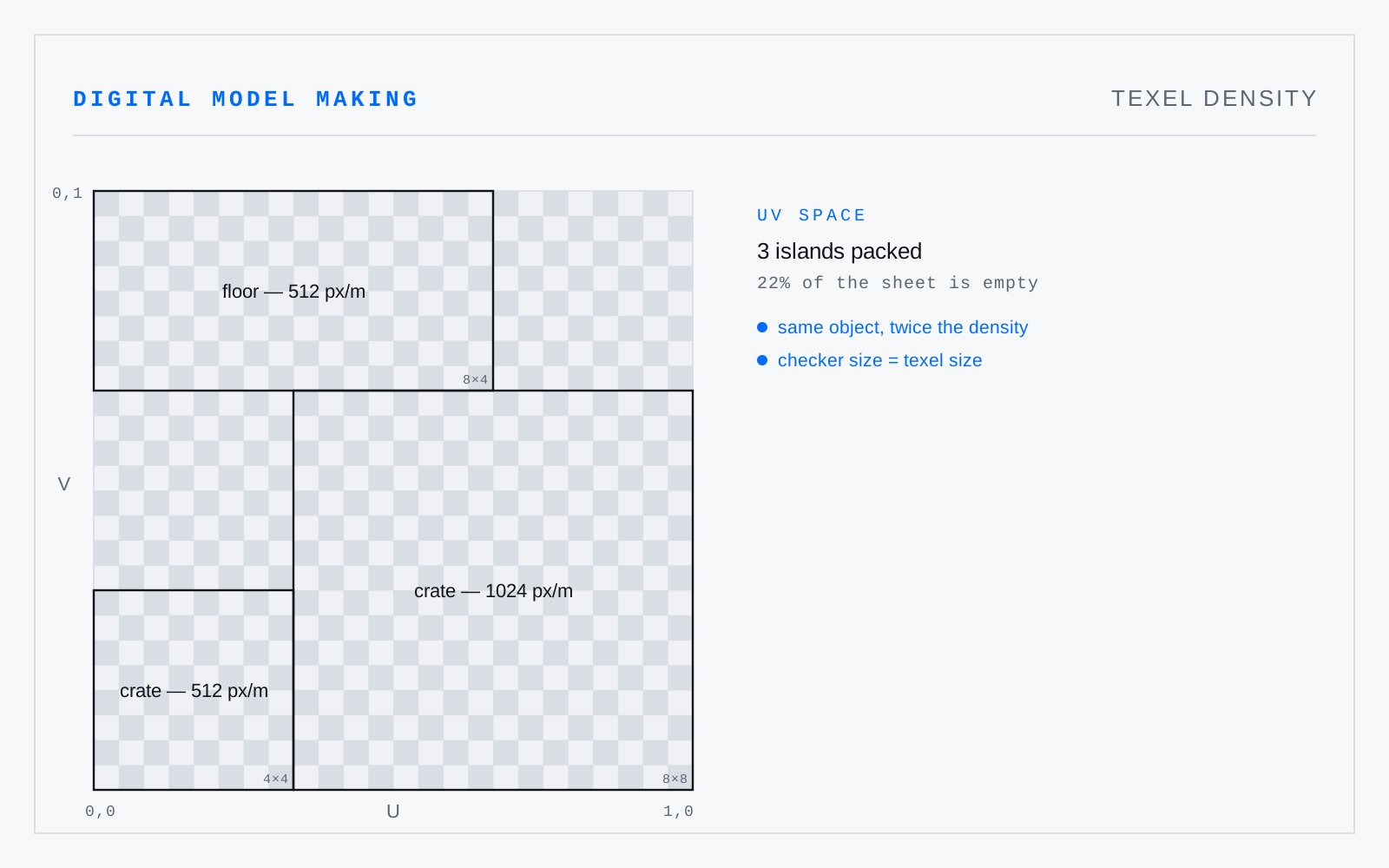
Texture pixels per unit of surface, quoted as px/cm or px/m. It is the one thing that makes texture resolution consistent across an asset: two objects at the same density read as the same material; at different densities they read as different budgets. Set it as a project standard, not per model.
Not to be confused with
- PPIImage samples per inch at a stated reproduction size, or the physical pixel pitch of a display. It describes a relationship between a file and an output, never the file alone: a 300 ppi image is 300 ppi only at the size it was specified for. Print it twice as wide and it is 150.
- ResolutionAmbiguous by use. The word names pixel dimensions (4096 by 4096), sampling density (300 ppi), and sometimes an output size in inches — three different quantities, of which any two determine the third. An image has no physical size until a density is chosen, so “high resolution” is not a property of a file.
Origin
Texel is texture element, formed on pixel from picture element. The coinage carries the whole idea — a texture is a sampled grid, and a texel has a real-world size once it lands on a surface.