Design Nomenclature / Surface & Material
Subsurface scattering
Also called sss, subsurface, bssrdf
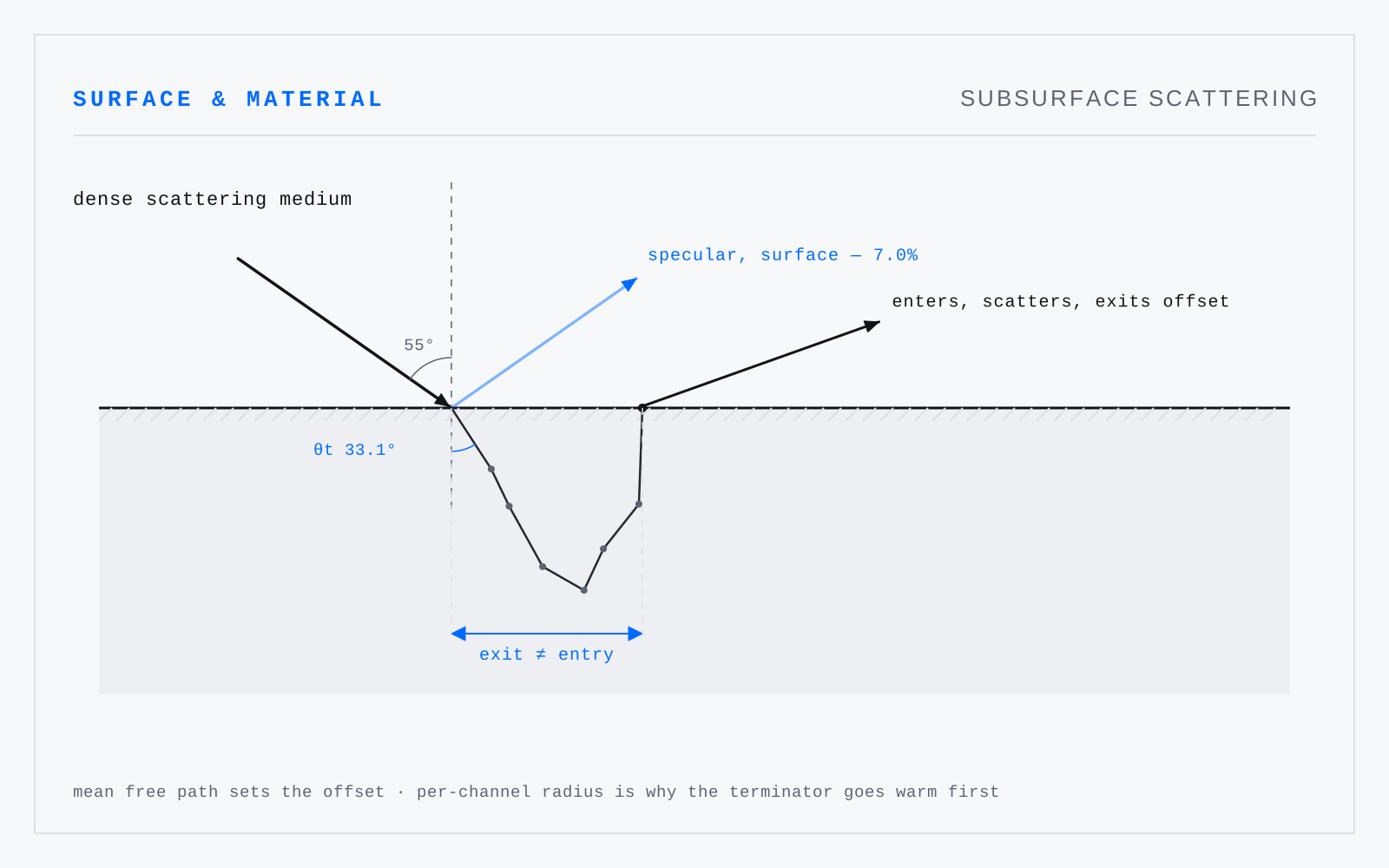
Light entering a translucent medium, bouncing repeatedly below the surface, and leaving at a different point — skin, marble, milk, leaves, wax. Governed by mean free path and phase function, both wavelength-dependent. Its signatures are softened shading terminators and colored bleed through thin sections: ears, fingers, petals.
In practice
Radius is usually authored per-channel with red longest, which is why the terminator on skin goes warm before it goes dark.
Not to be confused with
- TranslucencyTransmission with scattering: light passes through but its direction is randomized on the way, so the material glows without carrying an image. Frosted glass, vellum, thin marble, a paper lampshade. What survives is brightness and color; what does not is anything you could focus or read.
- TransmissionThe fraction of light passing through a material rather than reflecting or being absorbed, bent by the IOR on entry and exit. Unlike opacity, transmitted rays refract, tint by Beer–Lambert absorption over the distance travelled, and can focus into caustics. Thin-walled variants skip the refraction, which is how window glass renders cheaply.
- SheenAn extra grazing-angle lobe layered over the base response to approximate the soft bloom of fabric, where light catches the protruding ends of fibers standing off the surface. In the Disney formulation it is a tuned artistic control with no measured referent; later fiber-scattering models give it a physical basis it did not originally have.