Design Nomenclature / Surface & Material
Sheen
Also called cloth sheen, fabric sheen, velvet lobe
An extra grazing-angle lobe layered over the base response to approximate the soft bloom of fabric, where light catches the protruding ends of fibers standing off the surface. In the Disney formulation it is a tuned artistic control with no measured referent; later fiber-scattering models give it a physical basis it did not originally have.
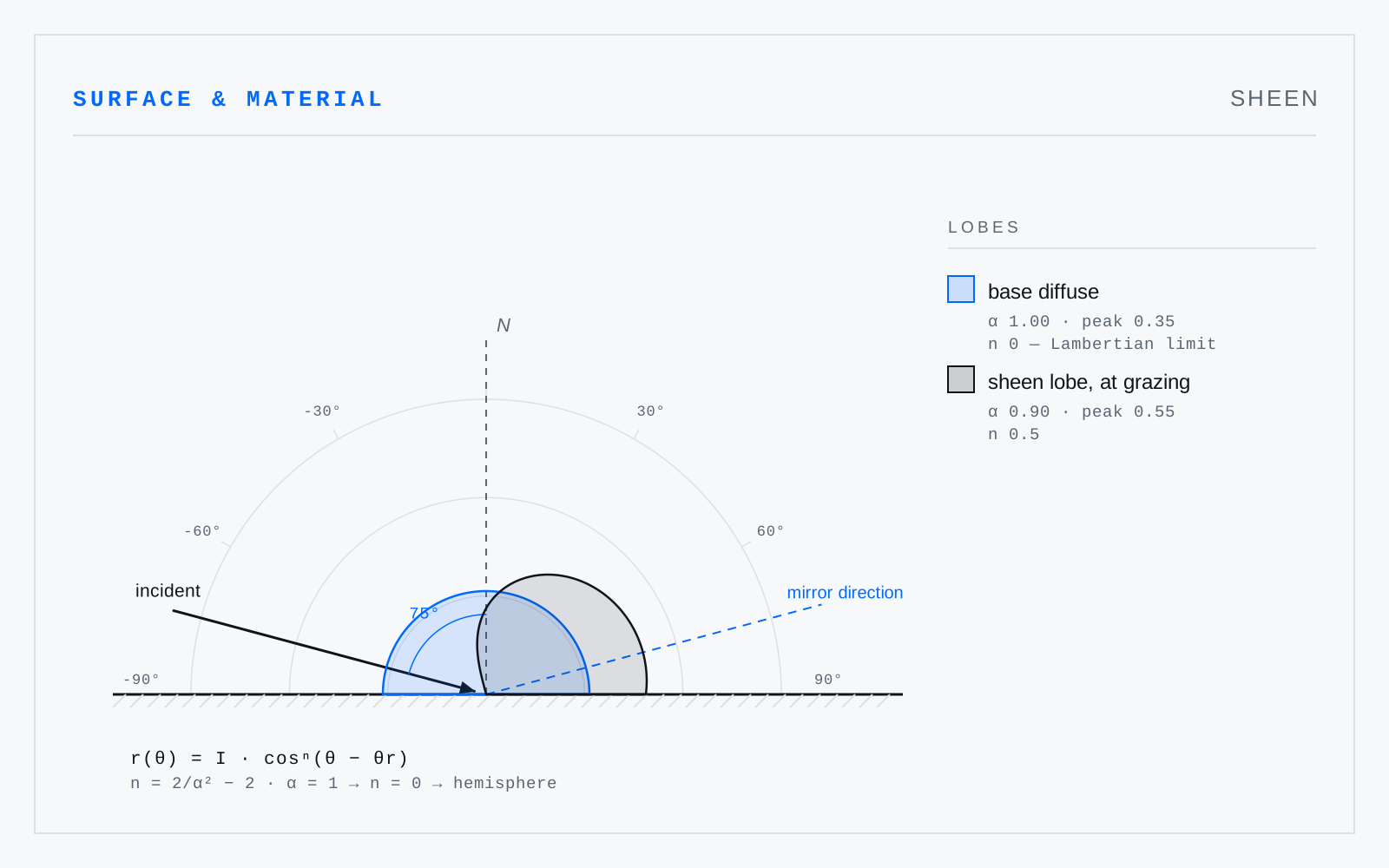
In practice
Also plain English for a low, soft shine, and the paint trade's word for the whole flat-to-gloss ladder. Three unrelated meanings.
Not to be confused with
- AnisotropyRoughness that differs along two tangent directions, stretching the highlight perpendicular to the surface's structure. Produced by anything unidirectional: brushed metal, hair, vinyl, satin weave. It needs a tangent frame to orient against, so it inherits every flaw in the UV layout and shears wherever the layout does.
- FresnelThe angle- and wavelength-dependent split of light at a boundary between reflected and transmitted. Reflectance is at its minimum facing the surface — four percent for common dielectrics — and climbs toward total as the angle approaches grazing. Curved forms read as rimmed because their silhouettes present grazing angles, not because edges emit anything.
- LusterThe character of a surface's reflected light rather than its quantity. Mineralogy names the kinds — vitreous, metallic, waxy, resinous, greasy, silky, adamantine, dull — and they are not points on one scale. Two surfaces can meter identical gloss and read as entirely different materials, because luster folds in transparency, subsurface scattering, and structure.
- SatinThe middle of the gloss ladder: enough specular return to catch a soft highlight, too much scatter to reflect a legible image. The paint trade's rungs — flat, eggshell, satin, semi-gloss, gloss — are marketing names over a continuous gloss-unit scale, and they do not align between manufacturers.