Design Nomenclature / Light & Optics
Luminance
Also called photometric luminance, cd/m², Y
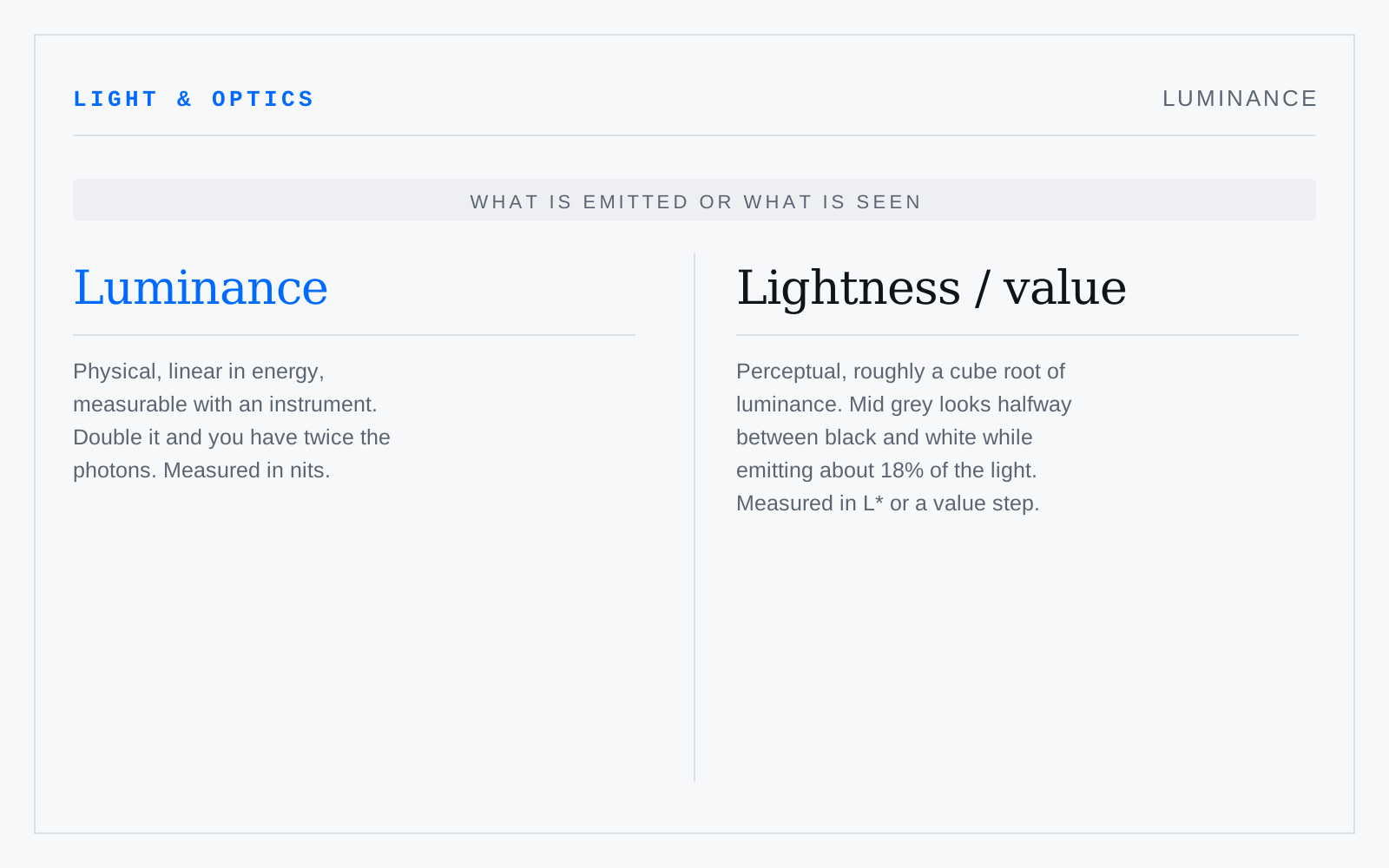
Radiance weighted by the eye's photopic sensitivity and integrated over wavelength — candela per square metre. It measures light leaving a surface toward the observer, is what a display's peak-brightness spec quotes, and is linear in energy, so equal steps in it are not equal steps in appearance.
In practice
Accessibility contrast ratios are luminance ratios computed from linearized sRGB. Feed them gamma-encoded values and the numbers come out wrong in the flattering direction.
Not to be confused with
- IlluminanceLuminous flux arriving per unit area, measured in lux — the photometric counterpart of irradiance. It describes light falling onto a surface, says nothing about what that surface then does with it, and is what a handheld meter reads when pointed back at the source.
- ValueHow light or dark a color is, independent of hue and chroma — the one attribute that survives conversion to greyscale. Value does the structural work: legibility, depth, and figure-ground separation all rest on value difference far more than on hue difference, and a composition that fails in greyscale was leaning on hue to hide it.
- RadiancePower per unit projected area per unit solid angle — the quantity carried along a single ray. It is constant along that ray in a vacuum, which is why a surface does not dim as you walk toward it, and why the sky's brightness is the same at any altitude.
- NitThe working name for candela per square metre, the unit of luminance. A phone in a dim room sits near 100 nits, a laptop outdoors pushes 500, HDR displays peak past 1,000, and the SDR reference white was standardized around 100. Every display brightness claim is quoted in these.