Design Nomenclature / Light & Optics
Nit
Also called candela per square metre, cd/m²
- Light & Optics
- Systems & Spec
- 2D & 3D
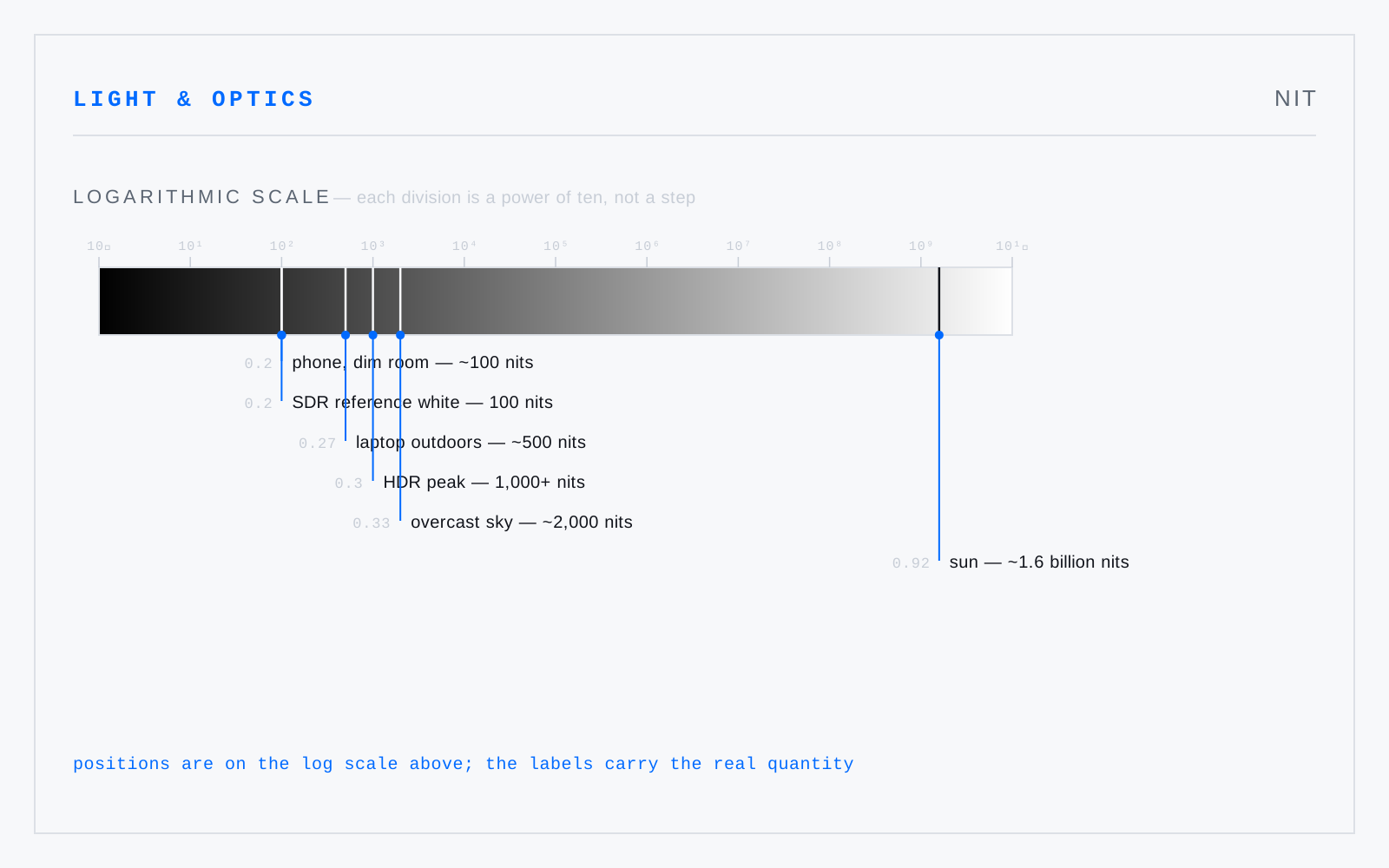
The working name for candela per square metre, the unit of luminance. A phone in a dim room sits near 100 nits, a laptop outdoors pushes 500, HDR displays peak past 1,000, and the SDR reference white was standardized around 100. Every display brightness claim is quoted in these.
In practice
Comfortable reading luminance tracks the ambient level, not a fixed target. The same 200 nits is glaring at night and unreadable at noon.
Not to be confused with
- LumenThe unit of luminous flux: total light power emitted in every direction, weighted by the eye's response. It says how much light a source makes and nothing about where any of it goes — a bare bulb and a tight spot of equal lumens do utterly different things to a wall.
- LuxOne lumen per square metre — the unit of illuminance. Overcast daylight runs around 1,000 lux, an office 300 to 500, full sun past 100,000. The foot-candle is the same quantity per square foot, and one foot-candle is 10.76 lux.
- CandelaLuminous intensity: lumens per steradian, light emitted in a given direction. It is the SI base unit for light, defined by fixing the luminous efficacy of 540 terahertz radiation at 683 lumens per watt. A fixture's beam is a map of candela against angle — which is what an IES file tabulates.
- LuminanceRadiance weighted by the eye's photopic sensitivity and integrated over wavelength — candela per square metre. It measures light leaving a surface toward the observer, is what a display's peak-brightness spec quotes, and is linear in energy, so equal steps in it are not equal steps in appearance.
Origin
From Latin nitere, to shine — a mid-century convenience name, never an SI one.