Design Nomenclature / Light & Optics
Halation
Also called halo, red halation
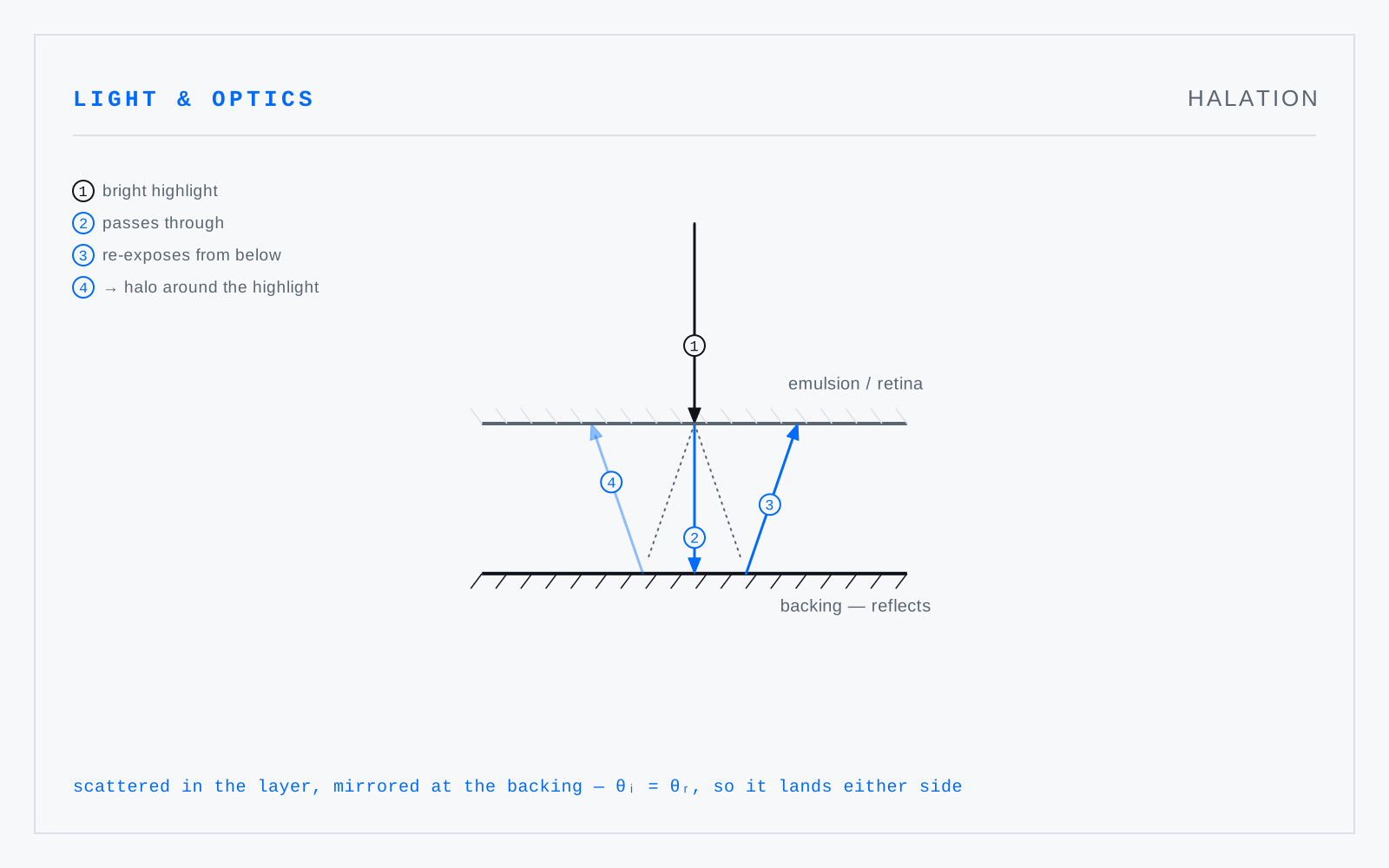
A halo around a bright area caused by light passing through the recording layer, reflecting off whatever sits behind it, and re-exposing the emulsion from below. Film stocks carry an anti-halation backing to suppress it; stocks without one — and some digital emulations — glow around highlights.
In practice
Now also used for what light text on a dark background does to some readers' vision: strokes appear to bleed and thicken, and it worsens with thin weights and high contrast.
Not to be confused with
- BloomA post-process that bleeds luminance outward from the brightest parts of an image, standing in for scattering in the lens, the sensor's cover glass, or the eye's own media. It is applied to the finished image rather than simulated in the light transport itself.
- GlareVisual impairment or discomfort caused by a luminance in the field of view far above what the eye is adapted to. Disability glare measurably reduces what can be resolved; discomfort glare merely hurts. Both depend on the ratio to the adaptation level, not on absolute brightness.
Origin
From halo plus -ation, coined in nineteenth-century photographic practice for exactly this reflection off the rear surface of the plate.