Design Nomenclature / Type
Leading
Also called line spacing, interline spacing, line-height
- Type
- 2D
The vertical distance from one baseline to the next. It is set against measure, not in isolation: a long line needs more of it for the eye to find the next line's start, a short line needs less. Under-leaded text merges lines; over-leaded text dissolves the paragraph into stripes.
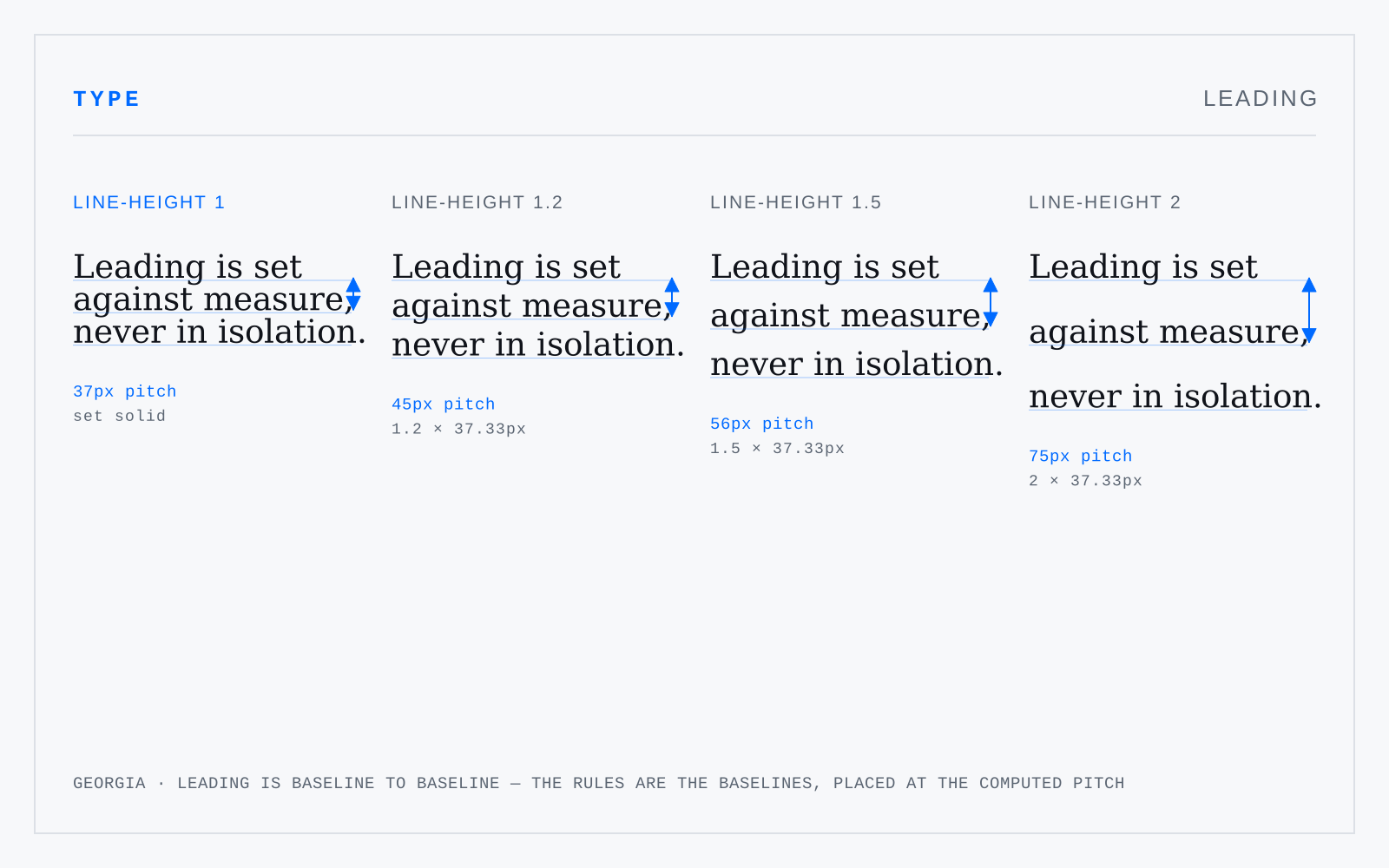
In practice
Print says leading and means baseline-to-baseline; CSS says line-height and means a box the text is centred in, so half of any increase goes above the first line. Unitless values, which inherit as a ratio rather than a computed length, are the right default.
Not to be confused with
- Word spacingThe space between words, set by the font's space glyph and adjustable via CSS word-spacing. It should be the smallest space that reliably separates words — roughly a quarter of an em in text faces. Too wide and it rivals the line space, breaking the line into islands and opening rivers in justified setting.
- Baseline gridAn invisible ruling at a fixed interval to which every baseline in a layout snaps, so text in adjacent columns aligns line for line and headings, images and rules land on the same increments. On the web it is enforced by making every vertical measurement a multiple of the body line-height rather than by an actual grid.
Origin
From the strips of lead a compositor slid between lines of type. Set solid meant no lead at all. The metal is gone; the word and the pronunciation (ledding) are not.