Skip to content
Peter Freedman.
WorkExpertiseAboutResearchDesign NomenclatureContact

Design Nomenclature / Type

Ascender

  • Type
  • 2D

The part of a lowercase letter rising above the mean line — b, d, f, h, k, l, and the upper stroke of t. Ascender length is a design variable rather than a fixed quantity: long ascenders read as classical and demand more leading; short ones buy a larger x-height on the same body.
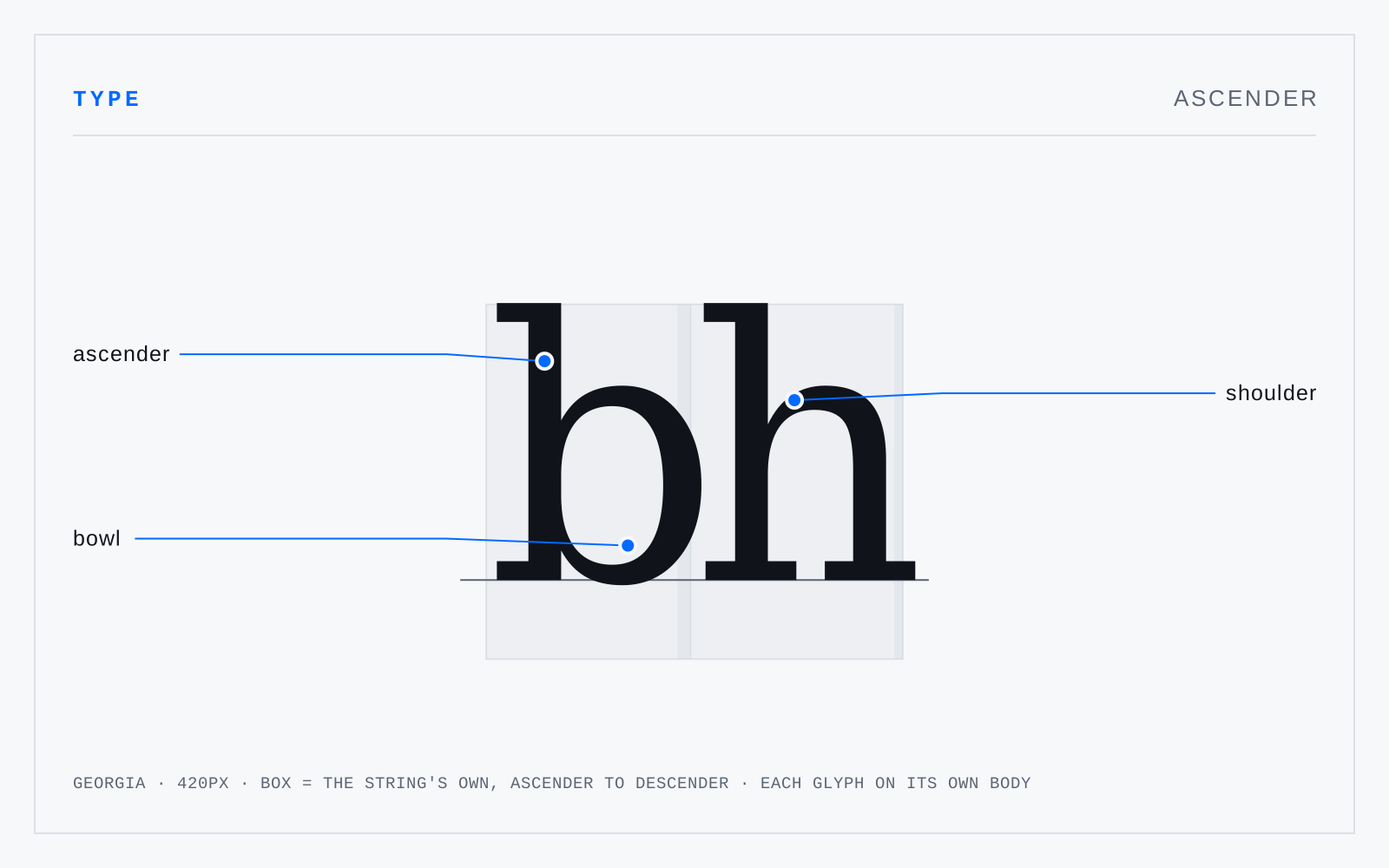
Lowercase b and h set large, each on its own body over a baseline. Leaders point to the b's tall stem rising above the x-height, labelled ascender; the round stroke closing the b's lower half, labelled bowl; and the crown of the h's arch, labelled shoulder.

Not to be confused with

  • Cap heightThe distance from the baseline to the top of a flat-topped capital such as H or E. Round capitals like O and S overshoot it slightly. In most Latin faces the cap height sits a little below the ascender line, which is why a lowercase l typically rises above an adjacent H.
  • DescenderThe part of a letter falling below the baseline — g, j, p, q, y, and in many faces the capital J and Q's tail. Descender depth interacts with line spacing directly: shallow descenders let lines pack tighter before ascenders and descenders begin to collide between them.

Related

  • Descender
  • X-height
  • Cap height
  • Mean line
  • Leading

How this term connects

Cap heightDescenderLeadingMean lineX-heightAscender
Related Confused with
  • Cap height
  • Descender
  • Leading
  • Mean line
  • X-height

Referenced by

  • Cap height
  • Descender
  • Mean line
Peter Freedman.

AI product developer & software architect. Intelligent software that people can understand and trust.

© 2026 Peter Freedman · Privacy

Explore

  • Work
  • Expertise
  • Research
  • Design Nomenclature
  • About
  • Contact

Elsewhere

  • peter@peterfreedman.com
  • LinkedIn ↗
  • GitHub ↗