Design Nomenclature / Type
Descender
- Type
- 2D
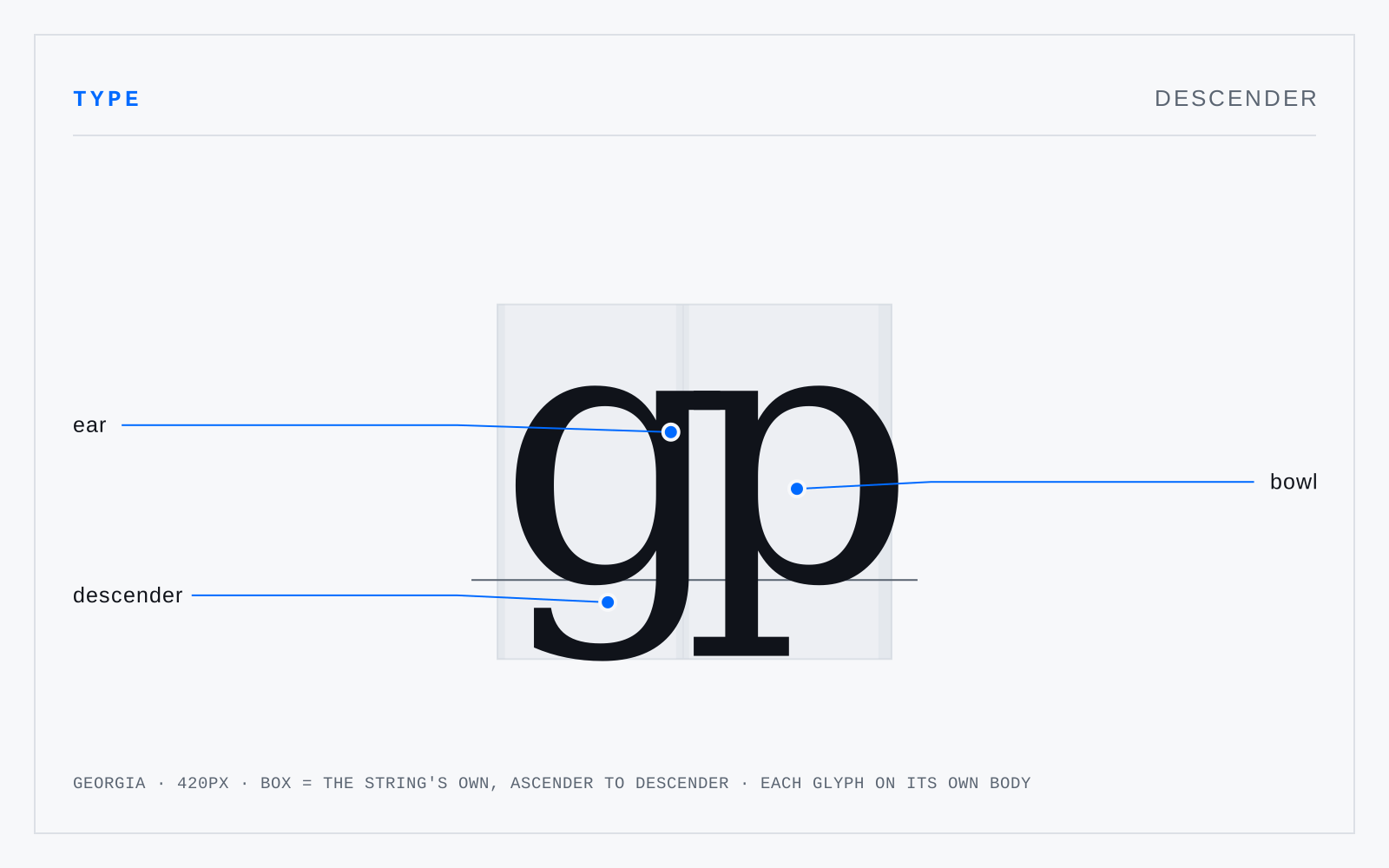
The part of a letter falling below the baseline — g, j, p, q, y, and in many faces the capital J and Q's tail. Descender depth interacts with line spacing directly: shallow descenders let lines pack tighter before ascenders and descenders begin to collide between them.
Not to be confused with
- AscenderThe part of a lowercase letter rising above the mean line — b, d, f, h, k, l, and the upper stroke of t. Ascender length is a design variable rather than a fixed quantity: long ascenders read as classical and demand more leading; short ones buy a larger x-height on the same body.
- TailA descending stroke, usually decorative or terminal rather than structural — the flourish of Q, the leg of R where it swings out, the descending finish of a single-storey g or a y. Tails are the most extended parts of a face and the first thing to collide with the line below.