Design Nomenclature / Color
CMYK
Also called process color, four-color process, four-colour process
The subtractive process set: cyan, magenta, yellow, and a key black. Black is there because real inks are impure and CMY overprint gives a muddy brown, and because laying three wet inks where one would do is slow to dry, expensive, and blurs anything as fine as text.
In practice
It names an ink set, not a color space. The actual gamut depends on stock, press, and profile — a number that means something on coated stock means something else on newsprint.
Not to be confused with
- RGBAn additive model addressing color as amounts of red, green, and blue primaries. RGB by itself specifies nothing absolute: the same triplet means different colors on different devices until a space pins down the primaries, the white point, and the transfer curve. RGB without a profile is a coordinate with no map.
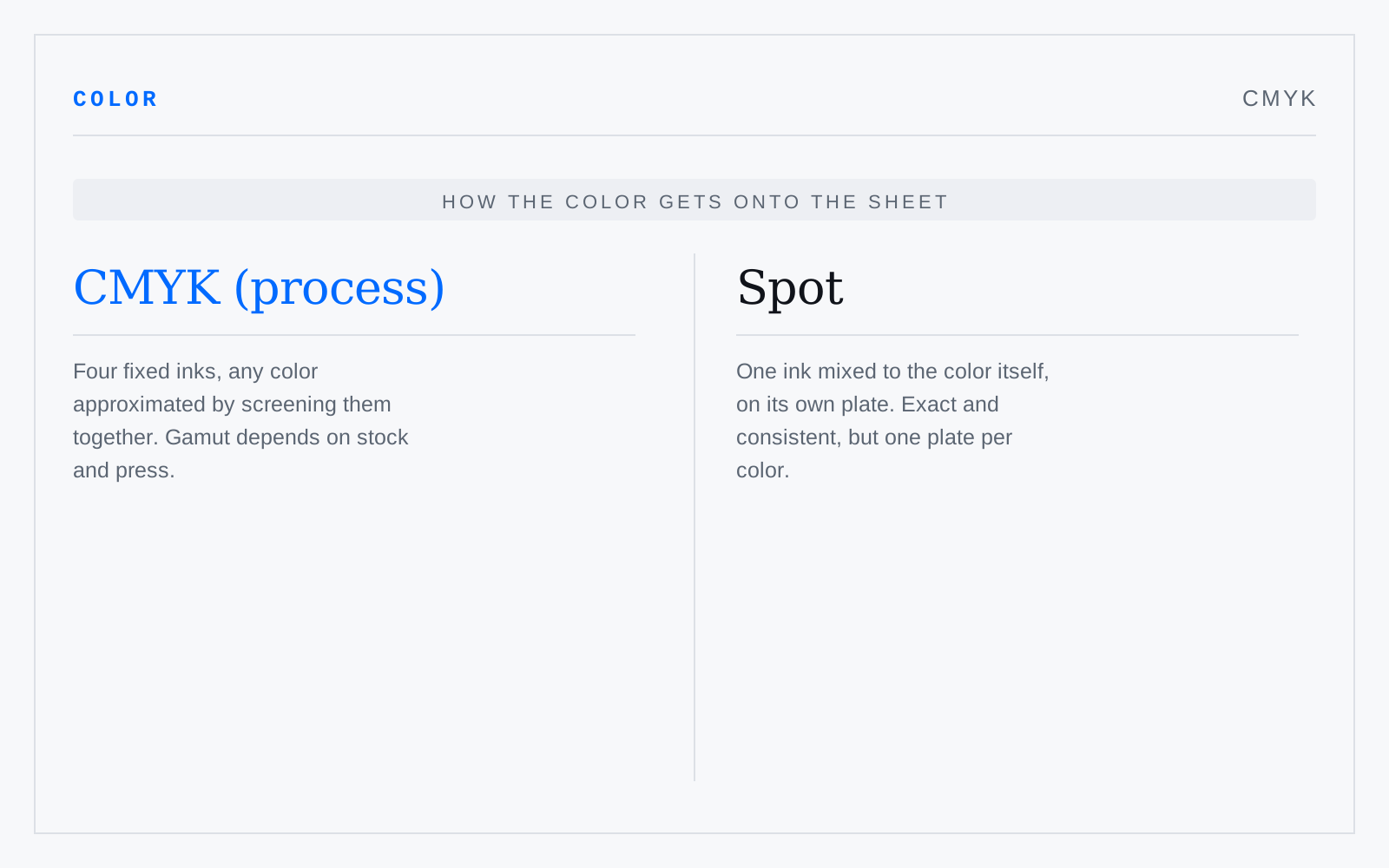
- Spot colorAn ink mixed to a specification and printed from its own plate rather than simulated out of process screens. Spot buys colors process cannot reach — metallics, fluorescents, a clean deep blue — and absolute consistency across a run, at the price of one more plate for each one.
- Subtractive colorMixing by removing wavelengths from a light source: each colorant absorbs part of the spectrum, so every addition darkens. Cyan, magenta, and yellow are the ideal primaries — each subtracts exactly one additive primary — and the red-yellow-blue set taught in schools is a historical approximation that demonstrably mixes worse.
Origin
K is for the key plate — the plate carrying the detail that the color plates registered to — not, despite the durable folk explanation, the last letter of 'black'.