Design Nomenclature / Color
Gamut
Also called color gamut, colour gamut
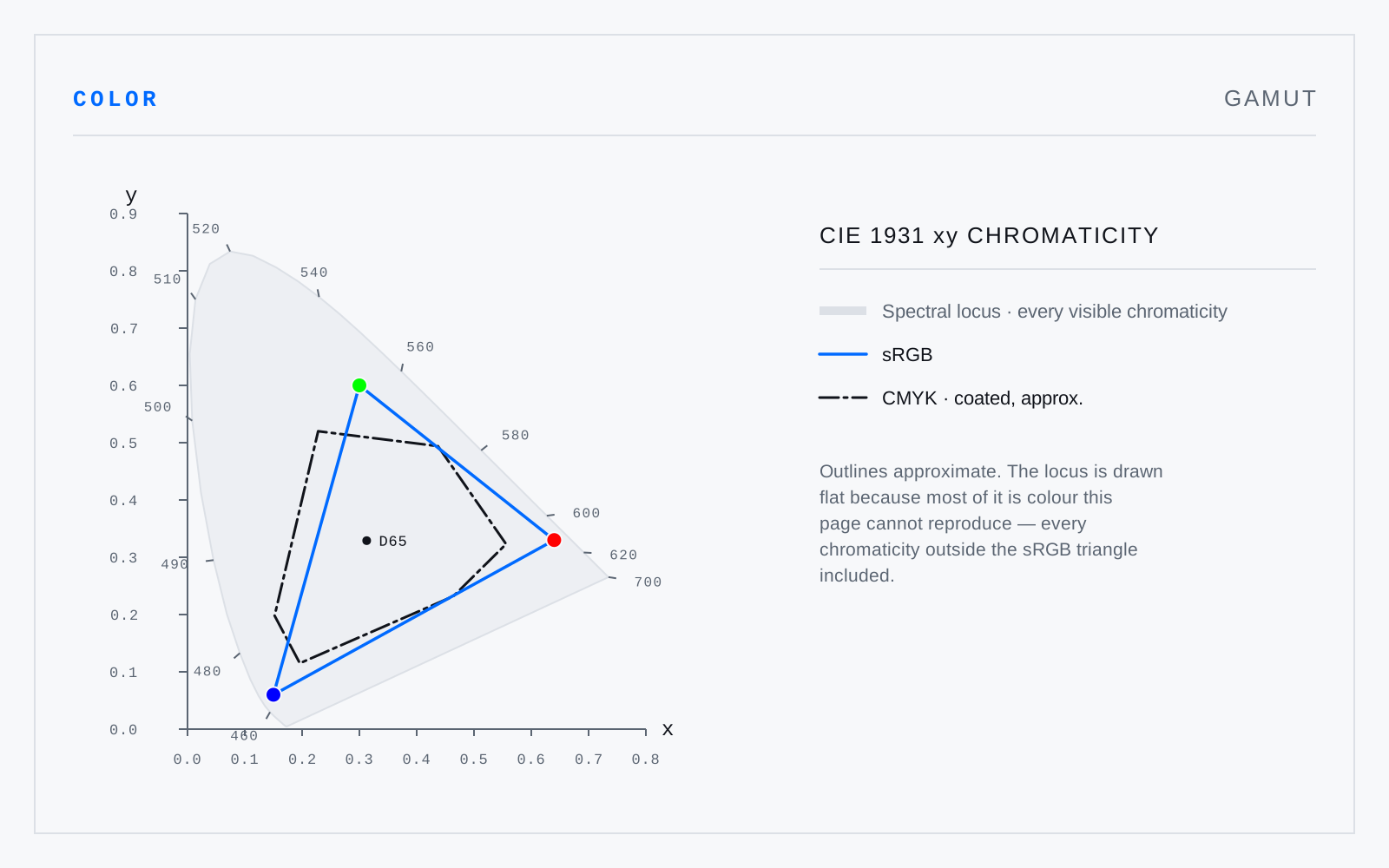
The set of colors a device or space can actually produce — a volume rather than an area, since reach changes with lightness. Every gamut is a subset of what the eye sees, and none contains another entirely: sRGB holds blues and greens no press can approach, while coated CMYK reaches yellows and cyans that fall outside sRGB.
In practice
'Out of gamut' means unreachable, not invalid. Gamut mapping decides the response — clip and lose separation in the extremes, or compress and shift everything a little.
Not to be confused with
- GammaThe power-law transfer function between encoded code values and light — historically the CRT's own response near 2.2, now kept deliberately because it spends limited bits where the eye discriminates most finely. sRGB's is piecewise, with a linear toe, averaging roughly 2.2 overall. It is also one of the three things that fix an RGB space, with primaries and white point.
- CMYKThe subtractive process set: cyan, magenta, yellow, and a key black. Black is there because real inks are impure and CMY overprint gives a muddy brown, and because laying three wet inks where one would do is slow to dry, expensive, and blurs anything as fine as text.