Design Nomenclature / Digital Model Making
Support Loop
Also called holding edge, control loop, supporting edge
An extra edge loop placed close to a hard edge so subdivision cannot round it away — the tighter the loop, the sharper the result. It costs geometry and complicates topology, but survives export, deformation, and every renderer, which is why production meshes use it instead of creases.
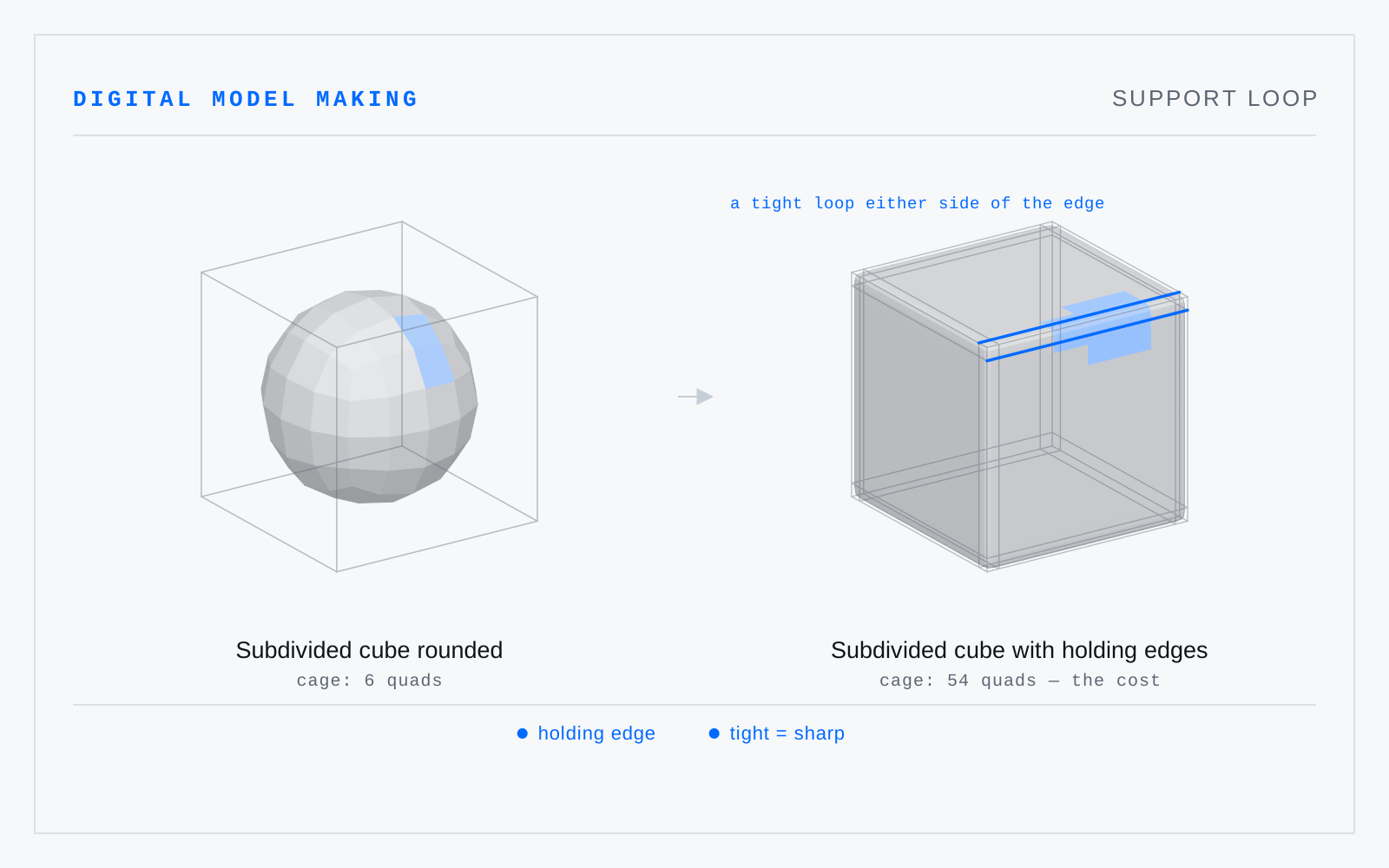
In practice
“Add a holding edge” is the standard note in a modeling review. Habit says three loops per hard edge; two is usually enough.
Not to be confused with
- CreaseA per-edge or per-vertex weight telling a subdivision scheme to pull its limit surface back toward the control mesh, sharpening the result without adding geometry. Weights run 0 to 1, or count integer steps of infinite sharpness. Cheap and freely editable — and carried by almost no exporter.
- Bevel (modifier)A procedural operation replacing each selected edge with a strip of faces at a set width and segment count — one segment reads as a chamfer, several as a fillet. Because it works on topology rather than solid geometry, it fails wherever the offset self-intersects: thin walls, tight corners, converging edges.