Design Nomenclature / Type
Script
Also called scripte, connecting script
- Type
- 2D
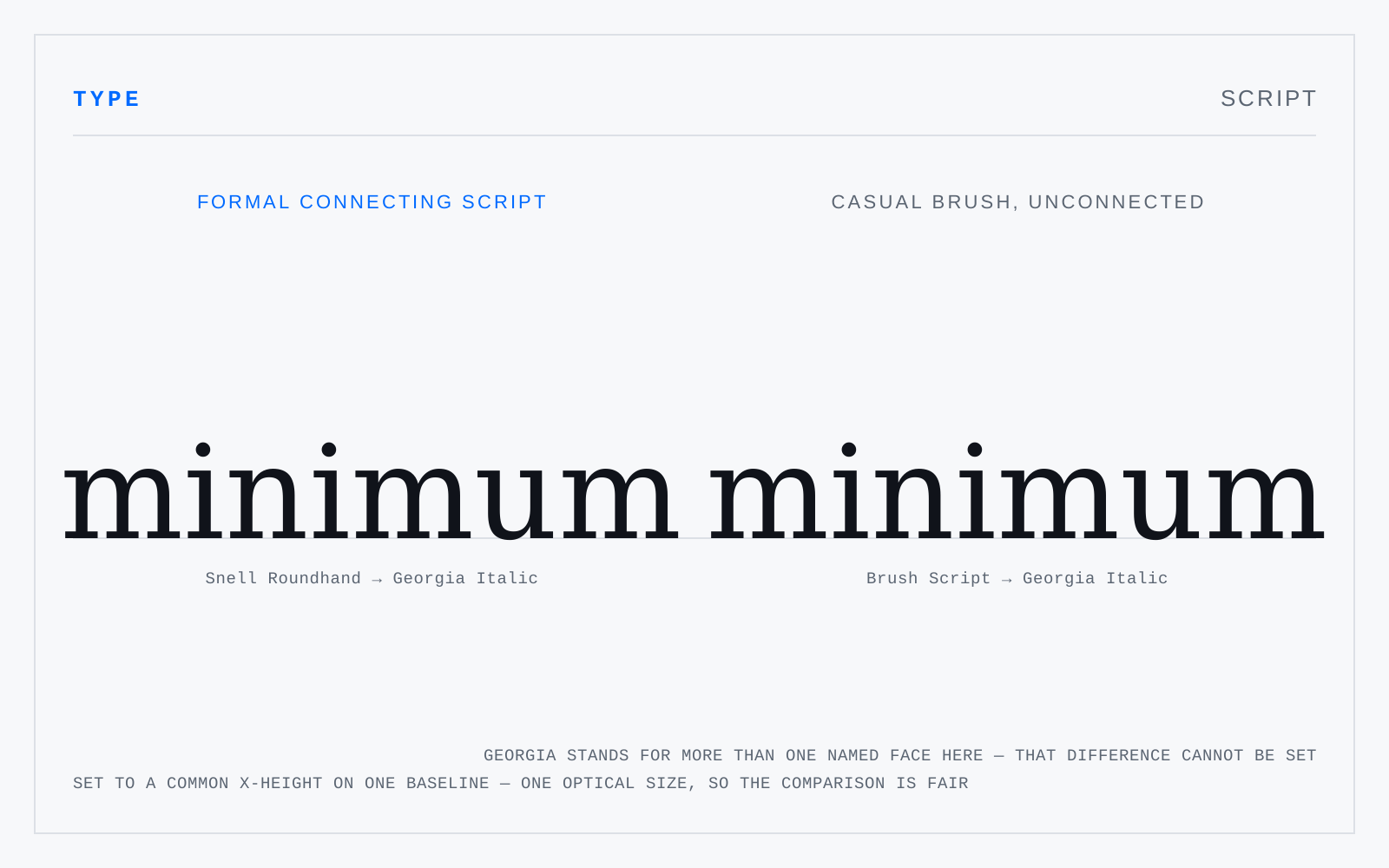
Faces modelled on handwriting, whether formal copperplate (Snell Roundhand), casual brush, or blackletter-adjacent hands. Connecting scripts are the technical problem: the join has to survive every letter pair, which is what OpenType contextual alternates and ligature substitution were largely built to handle.
In practice
The word also means a writing system — Latin script, Devanagari script. Context usually disambiguates; when it doesn't, say "script face".
Not to be confused with
- ItalicA separately drawn companion to a roman, based on a cursive hand: narrower, with different letter structures — a single-storey a, an f with a descender, entry and exit strokes — not merely a slanted roman. Italics began as standalone text faces in the 1500s and only later became the roman's subordinate partner for emphasis.
- BlackletterThe dense broken-pen hands of northern Europe and the types cut from them — Textura, Rotunda, Schwabacher, Fraktur. Gutenberg's type was Textura; Fraktur remained normal for German text into the twentieth century. Extremely economical of space and, to readers untrained in it, extremely slow.