Design Nomenclature / Type
Ligature
Also called liga, standard ligature, discretionary ligature, dlig
- Type
- 2D
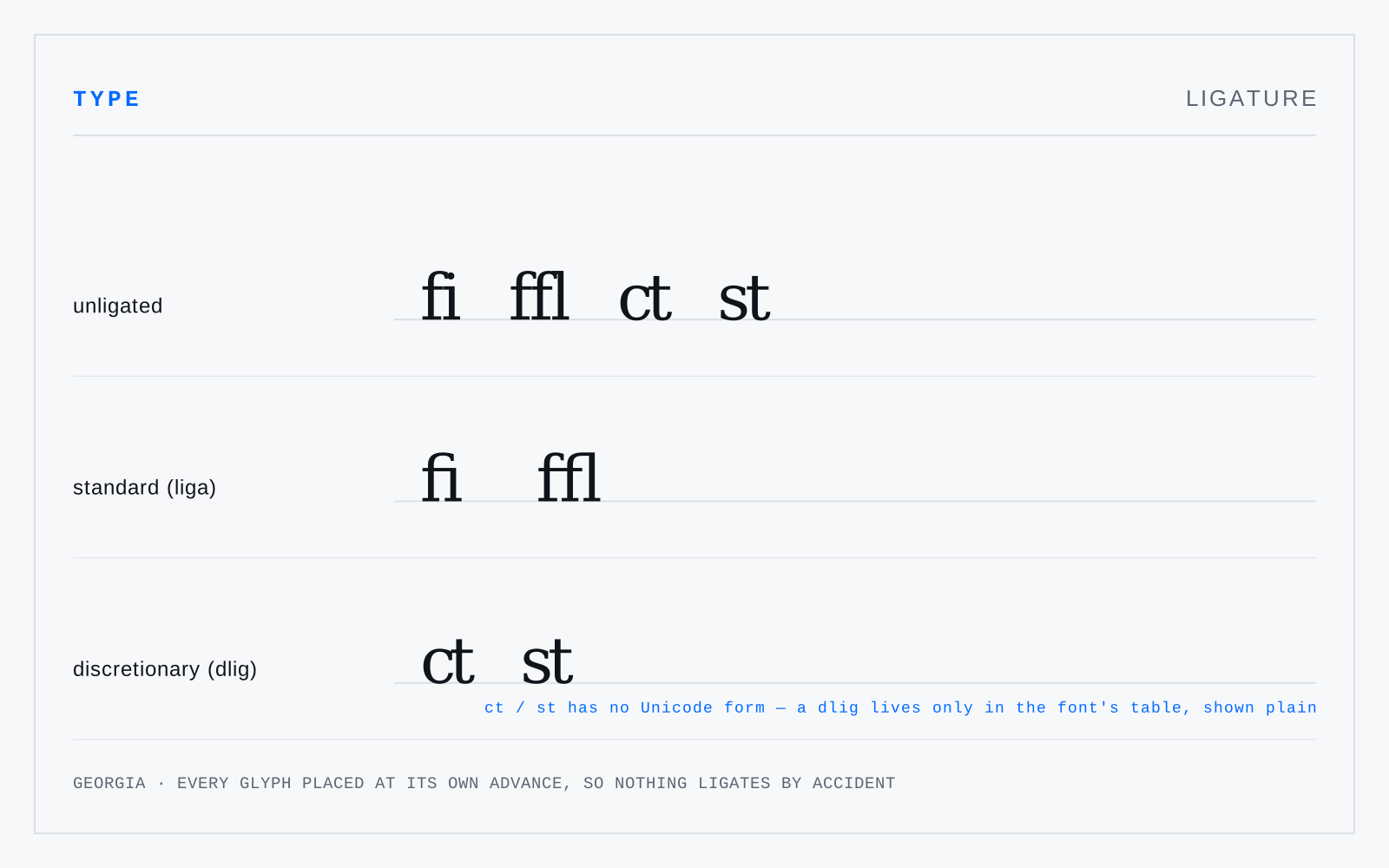
One glyph replacing a sequence, applied by OpenType's GSUB table. Standard ligatures (liga) fix collisions the letters make on their own — fi, ffl, where the f's terminal hits the i's dot — and are on by default. Discretionary ligatures (dlig) are ornamental: ct, st, Th. They are off by default for good reason.
In practice
dlig at text size is noise; at display size it can be the point. Note ligatures can break text selection and search in some PDF pipelines, and that ligating across a word boundary — as in some monospace coding fonts — is a different trick entirely.