Design Nomenclature / Composition
Prägnanz
Also called pragnanz, good form, law of good form, law of simplicity, minimum principle
- Composition
- Form & Geometry
- 2D & 3D
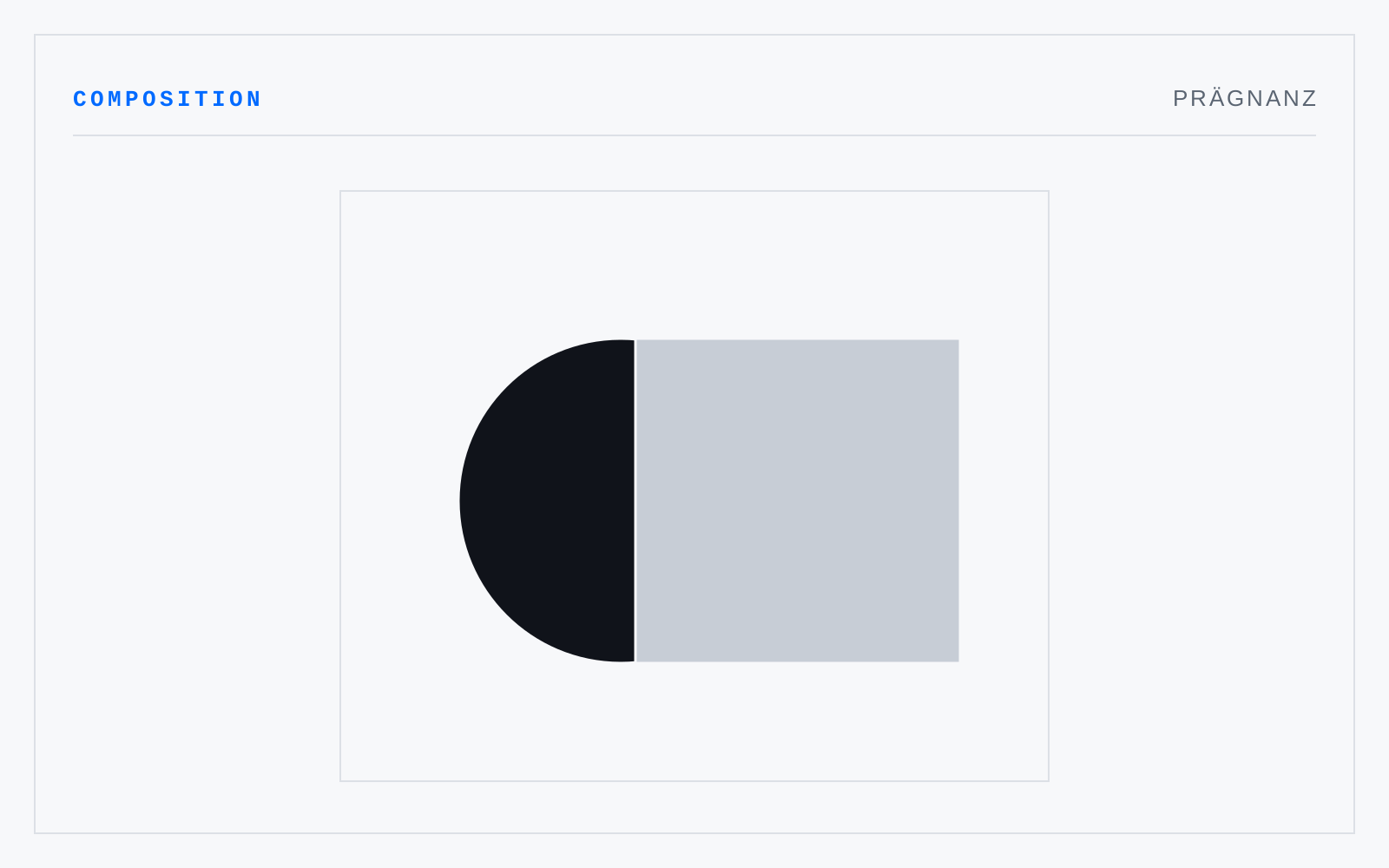
The overarching gestalt claim: of the readings a stimulus permits, perception settles on the simplest, most regular, most stable one. 'Simplest' was never given an agreed metric, which is the principle's standing weakness — the information-theoretic attempts to formalize it have not settled the question.
Not to be confused with
- ClosurePerception completes a figure across gaps, supplying contour that was never drawn. The effect is strongest when the implied shape is simple, regular, and familiar, and it survives interruptions far larger than most designers expect — which is why a mark built from fragments still reads as one form.
- GestaltThe body of perceptual regularities described by Wertheimer, Köhler, and Koffka from 1912 onward, holding that perception organizes a field into wholes before it registers parts. The principles describe how grouping tends to occur; several have been substantially revised, and two of the most cited were added sixty years later.
Origin
German Prägnanz, 'conciseness' or 'pithiness', from prägen, to stamp or mint — the sense is a form struck cleanly, not merely a form that is simple.