Design Nomenclature / Light & Optics
Indirect light
Also called bounce, bounced light, indirect illumination, secondary illumination
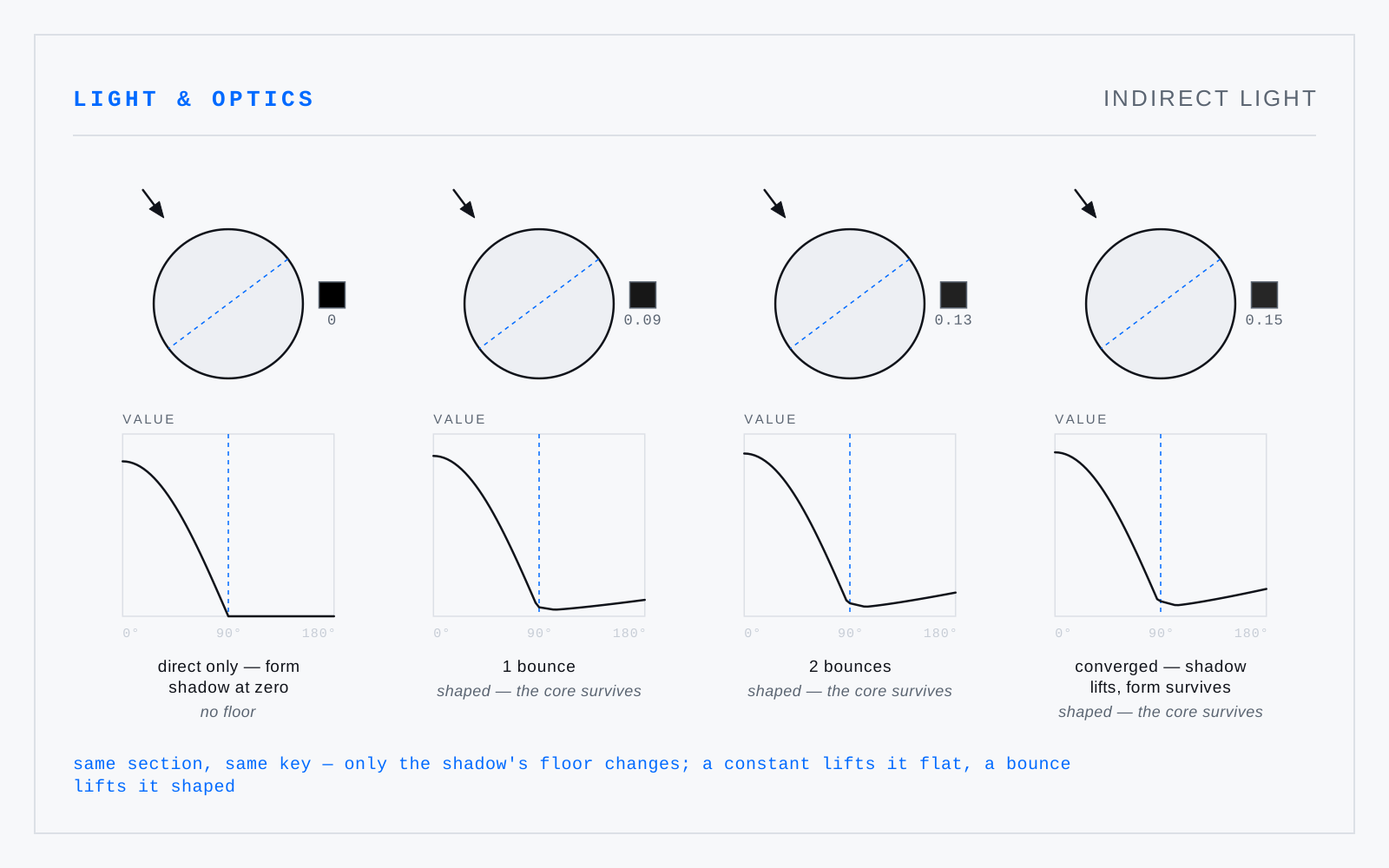
Light reaching a point only after one or more reflections off other surfaces. It carries their colour, arrives from broad directions rather than from one, and fills form shadows — which is why a scene lit by direct light alone has shadows that go dead black.
In practice
Renderers count it in bounces. Two is usually enough outdoors; a white interior needs many more before it stops looking underlit.
Not to be confused with
- Bounce lightLight redirected off a reflector — card, wall, ceiling, scrim — rather than aimed at the subject directly. The reflector becomes the effective source, so its size and distance, not the lamp's, govern shadow softness. Its colour is the reflector's albedo multiplied into the beam.
- Ambient lightIn a renderer, a constant added to every shaded point regardless of direction, occlusion, or distance — a flat lift with no physical referent, invented to fake indirect light before global illumination was affordable. In a room, the same phrase means the real diffuse light arriving from every direction at once.
- Global illuminationAny solution to light transport accounting for light that arrives after reflecting off other surfaces, not only direct from emitters. It is a category, not an algorithm — radiosity, photon mapping, path tracing, and irradiance caching all compute it, with different biases and different failure modes.