Design Nomenclature / Type
Garalde
Also called old style, oldstyle, Aldine
- Type
- 2D
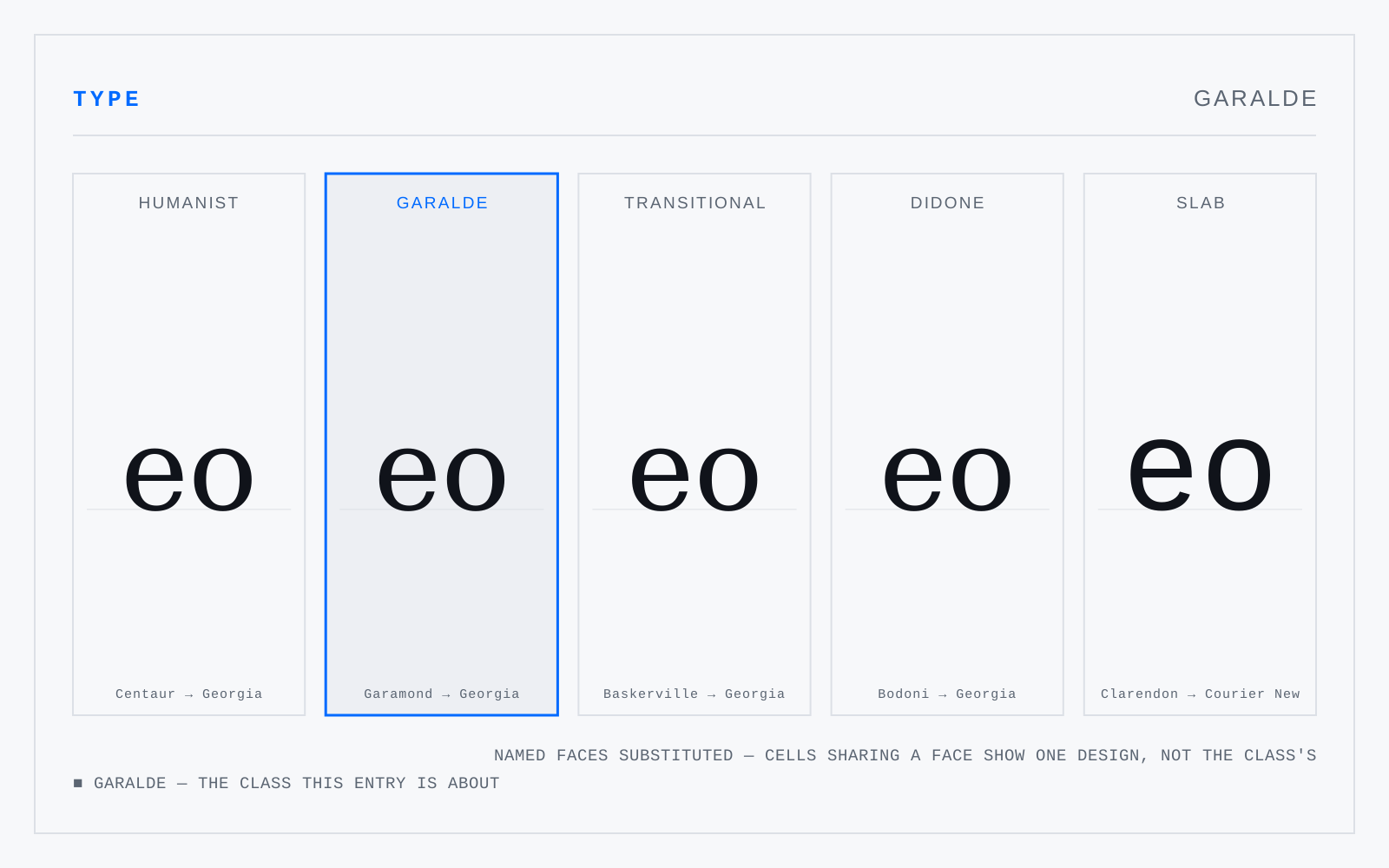
The dominant text roman from roughly 1500 to 1750 — Bembo, Garamond, Granjon, Caslon. Compared to the humanists: more stroke contrast, a level bar on the e, finer bracketed serifs, and stress still inclined but less so. Caslon and Janson sit at its late edge, already reaching toward the transitionals.
In practice
"Old style" is the everyday name in English-speaking studios; garalde is the classifier's word. They mean the same shelf.
Not to be confused with
- Humanist serifThe first roman types, cut in Venice from the 1470s and revived since — Jenson, Centaur, Adobe Jenson. Marked by low stroke contrast, strongly inclined stress, sturdy bracketed serifs, a small x-height and, decisively, a slanted bar on the lowercase e. Their model is the humanist hand, not the broadside.
- TransitionalMid-eighteenth-century romans between the garaldes and the didones — Baskerville, Fournier, Bulmer, and the Romain du Roi ahead of them. Stress swings to near-vertical, contrast rises, serifs sharpen and flatten, and the whole design starts to be drawn to a grid rather than derived from a pen.
Origin
Coined by Vox from Garamond and Aldus Manutius, whose Griffo-cut roman of 1495 is the origin of the class.