Design Nomenclature / Color
Contrast of complements
Also called complementary contrast
- Color
- Composition
- 2D & 3D
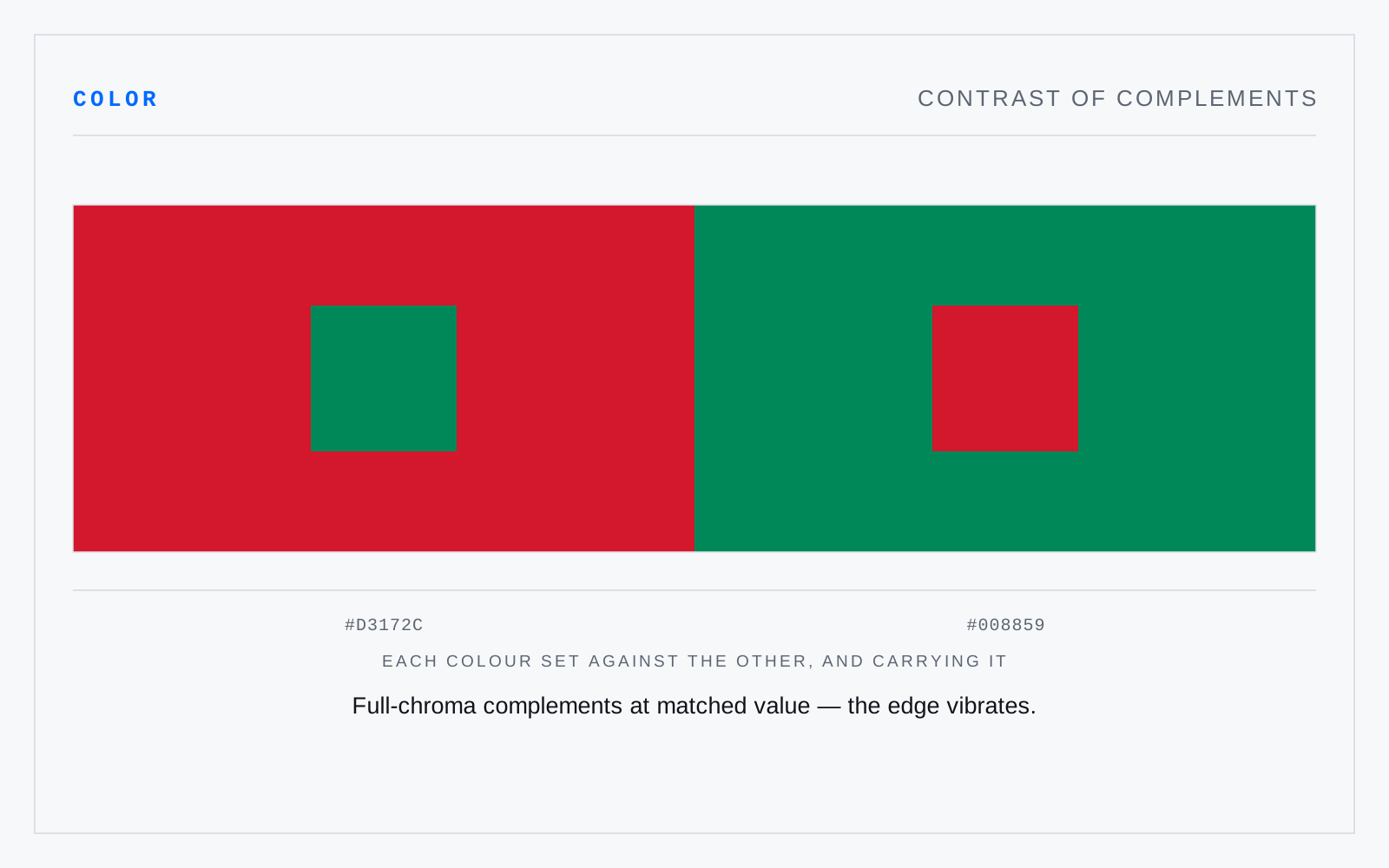
Difference between hues that cancel to neutral when mixed. Set adjacent at full chroma they intensify one another to the point of vibration — the shared edge appears to shimmer, because neither hue can win the local adaptation and the eye keeps re-deciding. Muting one member is the usual fix.
Not to be confused with
- Contrast of hueItten's simplest contrast: difference carried by hue alone, strongest between unmixed primaries. It is also the weakest tool for legibility, since hue difference without value difference vanishes for dichromats and in greyscale — two colors can be maximally opposed in hue and identical in value.
- Simultaneous contrastA color's appearance shifting according to what surrounds it: a grey patch on red takes a greenish cast, the same grey on green turns faintly pink. The eye induces the complement of the surround into the field. Nothing about the patch changes — the measurement is identical, the percept is not.