Overview
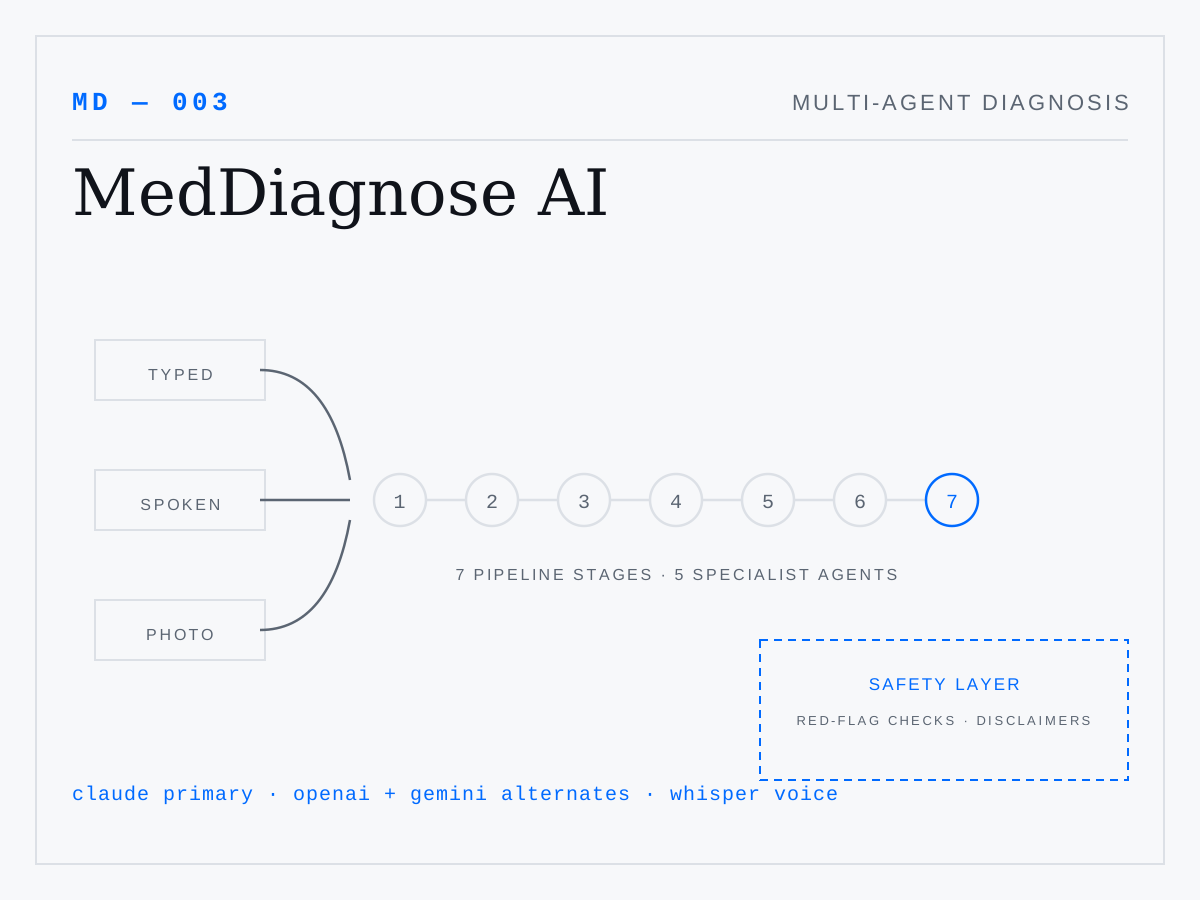
MedDiagnose AI applies multi-agent AI to helping a patient understand their symptoms. Users describe what they're experiencing through chat, voice, annotated photos, or an interactive body map, and a pipeline of cooperating AI agents produces a structured differential diagnosis, treatment suggestions, contraindication checks, and a plain-English report with PDF export. It is an educational and demonstration system with prominent disclaimers, not a clinical device.
The Agent Pipeline
Diagnosis runs through seven stages: a triage agent structures the intake, diagnostician and research agents work in parallel, a specialist stage routes to one of five domain sub-agents (cardiology, neurology, dermatology, gastroenterology, psychiatry), followed by treatment, safety, and an empathy agent that translates clinical findings into plain language. Agents consult one another over an async message bus, drug-interaction and medical-image agents contribute where relevant, and a self-learning quality auditor reviews outputs. Progress streams live to the browser over server-sent events.
Multi-Provider AI
The LLM layer is provider-agnostic: Claude is the primary engine, with OpenAI and Gemini as alternates and Whisper handling voice transcription. That made the system a working testbed for comparing model behavior on identical structured-reasoning tasks.
Engineering Highlights
- FastAPI backend with SQLAlchemy 2, Alembic migrations, PostgreSQL, Redis, and rate limiting
- Vue 3 + Vite frontend with Capacitor mobile/PWA packaging and 12-language i18n
- Stripe subscriptions, a 16-page admin dashboard, developer API portal, and white-label theming
- Test coverage across pytest, Vitest, and Playwright end-to-end suites; Docker Compose deployment
Outcome
A complete reference architecture for multi-agent AI in a high-stakes domain: structured pipelines, specialist routing, auditing, and honest disclaimers instead of black-box answers.