Design Nomenclature / Surface & Material
Tooth
Also called key, surface tooth, bite
The fine mechanical roughness that lets a medium grab a substrate. Pastel, charcoal, and ink hold to a sheet's tooth; primer keys to a sanded panel. It is finite — a surface takes a limited number of layers before the tooth loads up and stops accepting more, which is a working constraint, not a defect.
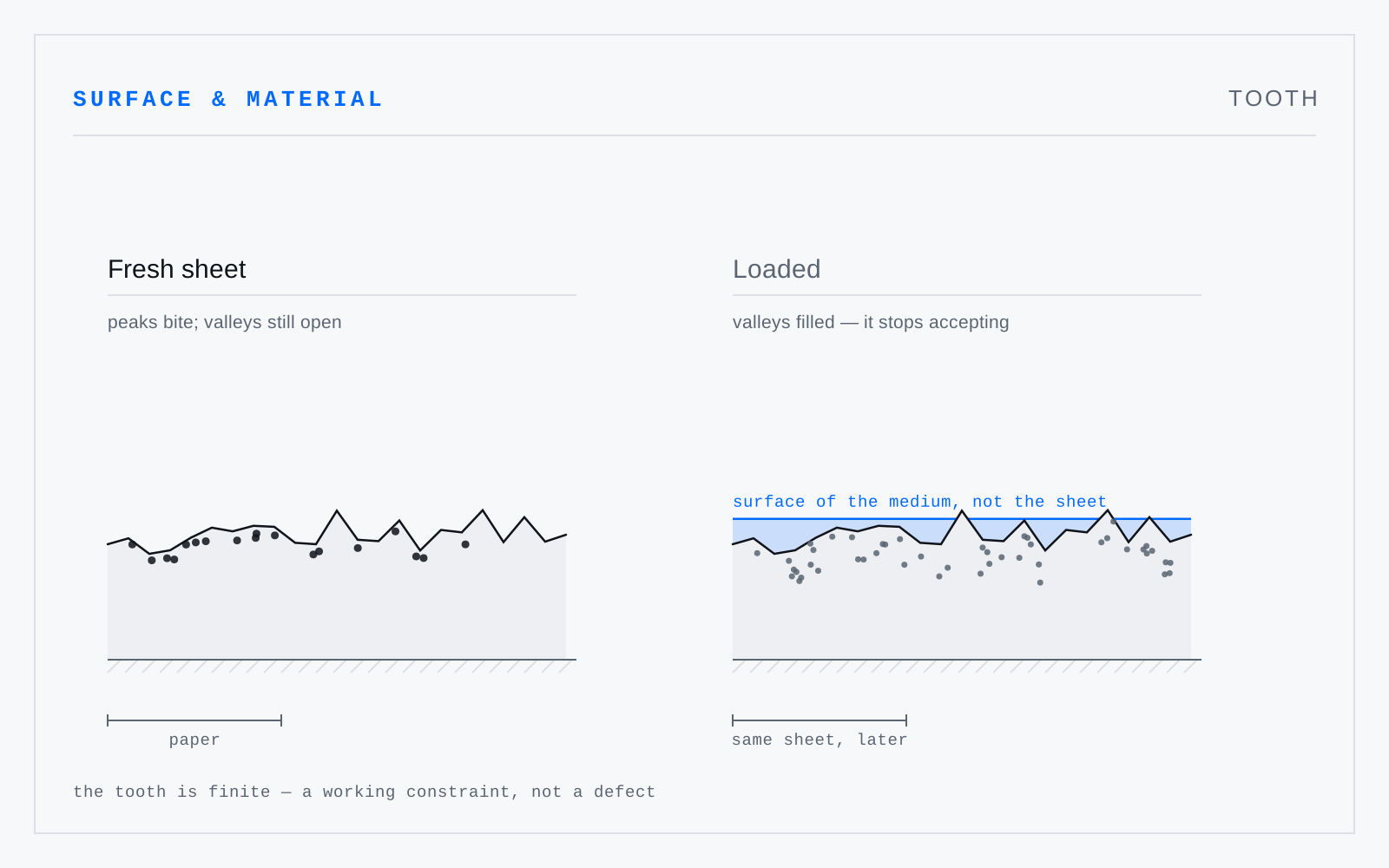
In practice
Judged by feel and by how the sheet takes a first stroke. Paper mills grade it as texture or finish; neither number tells you when it will fill.
Not to be confused with
- NapRaised fiber ends standing off a textile or paper and lying in one direction, so the surface reflects and feels different with the lay and against it. Velvet, suede, corduroy, flocking. Cut two panels of a garment with the nap running opposite ways and they will read as two different colors.
- MatteA surface that returns light almost entirely by diffuse scattering, so no image of the environment survives and brightness holds roughly steady as you move. Achieved by micro-roughening — blasting, flatting agents, a coarse sheet. Under 10 gloss units at 60° by common convention, though nobody agrees on the cut.
Origin
From the sense of tooth as bite: the surface bites into the medium and holds it. The related trade word, "key," carries the same mechanical idea.