Design Nomenclature / Color
Split-complementary
Also called split complement
- Color
- Composition
- 2D & 3D
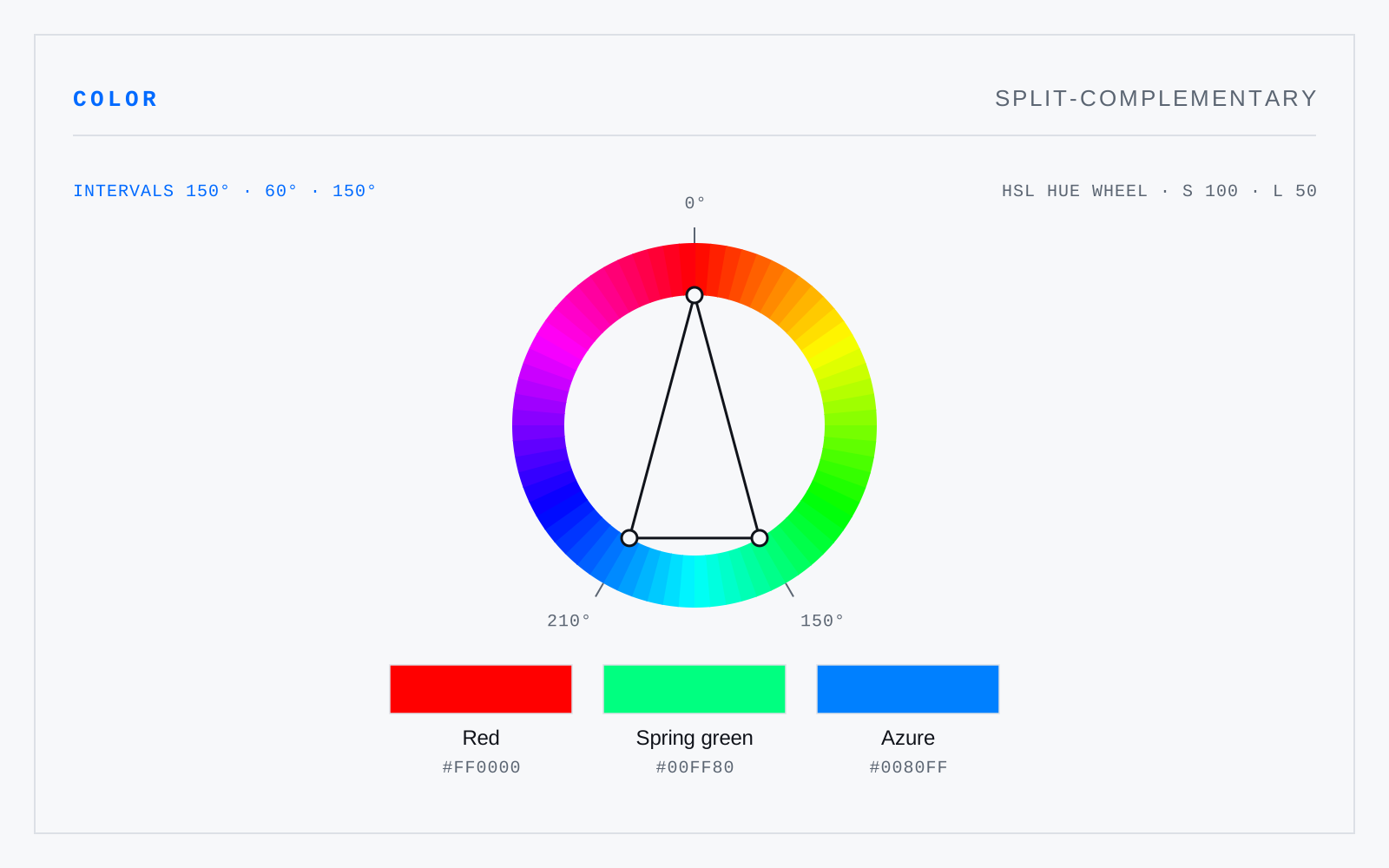
A hue paired with the two hues flanking its complement, roughly 150 and 210 degrees away. It keeps the tension of a complementary pair while removing the vibration of true opposites, which makes it the most forgiving three-hue scheme: hard to make ugly, hard to make memorable.
Not to be confused with
- ComplementaryA pair of hues opposite one another on a color wheel — but which pair depends entirely on the wheel. In RYB, blue opposes orange; in additive light, blue opposes yellow; in an opponent space, opposition is the negation of both axes. The schoolroom red-green pairing is a pigment convention, not a fact about light.
- TriadicThree hues spaced 120 degrees apart: maximum spread with perfect symmetry, which is also the difficulty. Three equally strong hues compete for the same job, so a triad only resolves once one hue takes the field by area and the other two are demoted to accents.