Design Nomenclature / Light & Optics
Irradiance
Also called E, watts per square metre, incident flux density
Power arriving per unit area of a surface, in watts per square metre — the cosine-weighted integral of incoming radiance over the hemisphere above it. It is a property of a location, retains no direction, and collapses everything arriving there into a single number.
In practice
Diffuse shading is irradiance times albedo over pi. Once that lands, Lambert's cosine term stops being a fudge and becomes the projected-area factor it always was.
Not to be confused with
- RadiancePower per unit projected area per unit solid angle — the quantity carried along a single ray. It is constant along that ray in a vacuum, which is why a surface does not dim as you walk toward it, and why the sky's brightness is the same at any altitude.
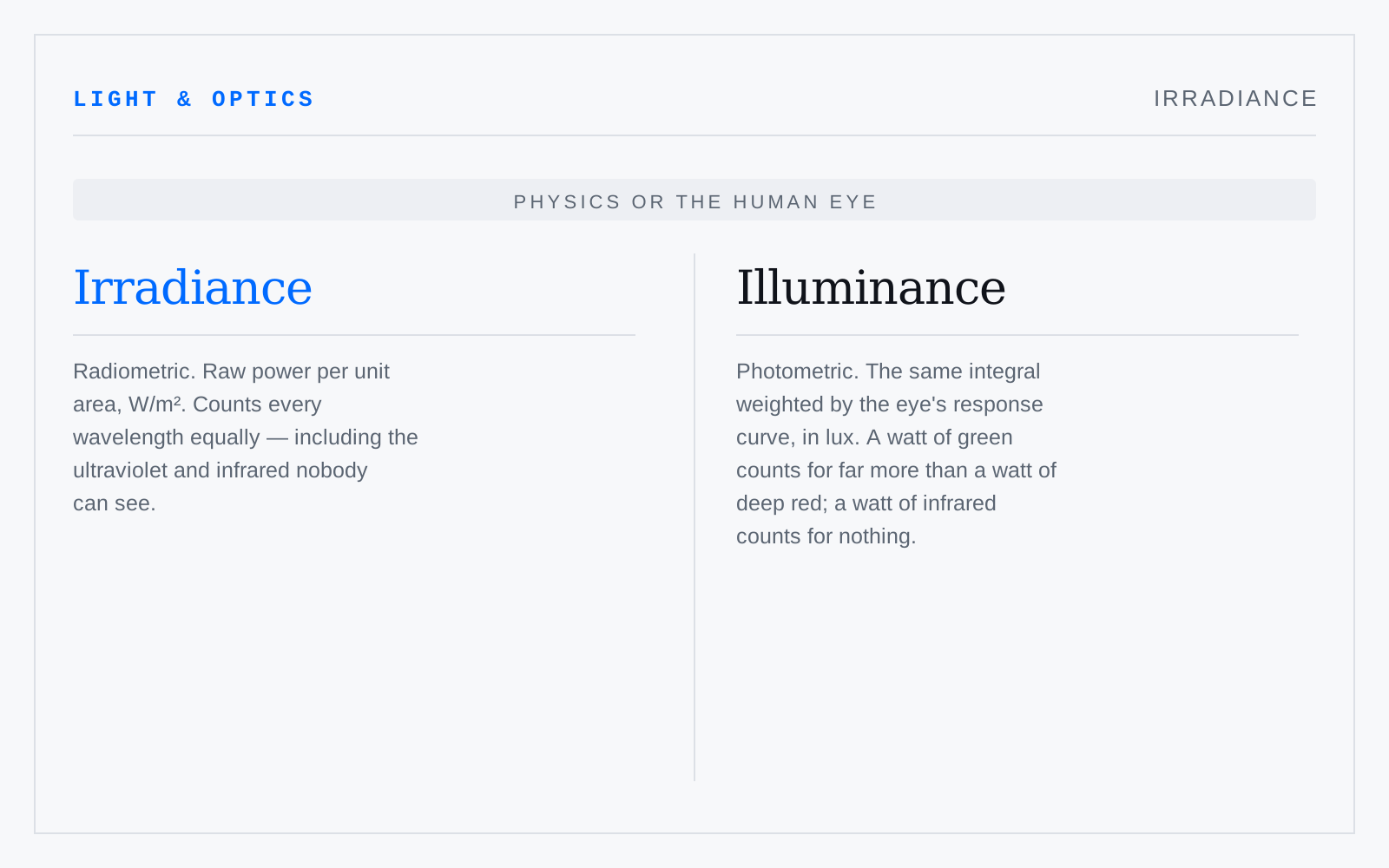
- IlluminanceLuminous flux arriving per unit area, measured in lux — the photometric counterpart of irradiance. It describes light falling onto a surface, says nothing about what that surface then does with it, and is what a handheld meter reads when pointed back at the source.
- RadiosityStrictly, a finite-element method that divides a scene into patches, computes form factors between them, and solves the resulting linear system for diffuse interreflection — view-independent, no speculars, and effectively unused since the 1990s. Loosely, and confusingly, the same word gets thrown at global illumination in general.