Design Nomenclature / Surface & Material
Index of refraction
Also called ior, refractive index, n
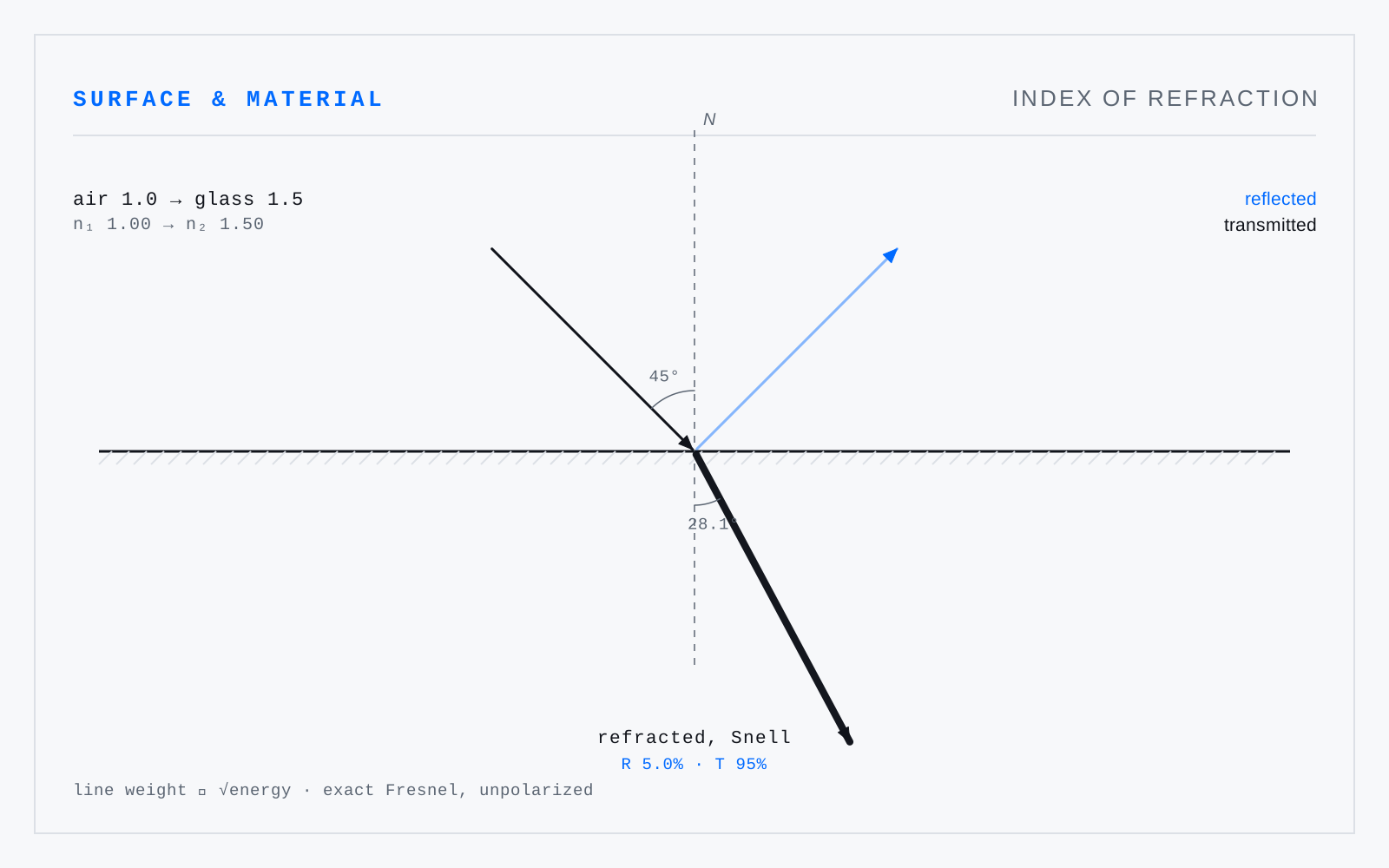
The ratio of light's speed in vacuum to its speed in a medium, setting both how far a ray bends on entry, per Snell's law, and how much reflects at normal incidence. Water 1.33, glass around 1.5, diamond 2.42. Conductors need a complex-valued index, which is why metals resist the same treatment.
In practice
Most PBR shaders hide it behind a specular scalar; you are setting IOR whether the slider says so or not.
Not to be confused with
- SpecularIn metal/rough conventions, a scalar remapping a dielectric's normal-incidence reflectance — default 0.5 meaning four percent, the top of the range around eight. In spec/gloss conventions, an RGB map giving that reflectance directly, which is also where conductors get their tint.
- TransmissionThe fraction of light passing through a material rather than reflecting or being absorbed, bent by the IOR on entry and exit. Unlike opacity, transmitted rays refract, tint by Beer–Lambert absorption over the distance travelled, and can focus into caustics. Thin-walled variants skip the refraction, which is how window glass renders cheaply.