Design Nomenclature / Composition
Golden ratio
Also called phi, golden section, divine proportion, golden mean, φ
The ratio 1:1.618…, in which the whole stands to the larger part as the larger part stands to the smaller. A rectangle carrying it subdivides indefinitely into a square and another such rectangle — a genuinely useful self-similar property, and the honest reason to reach for it.
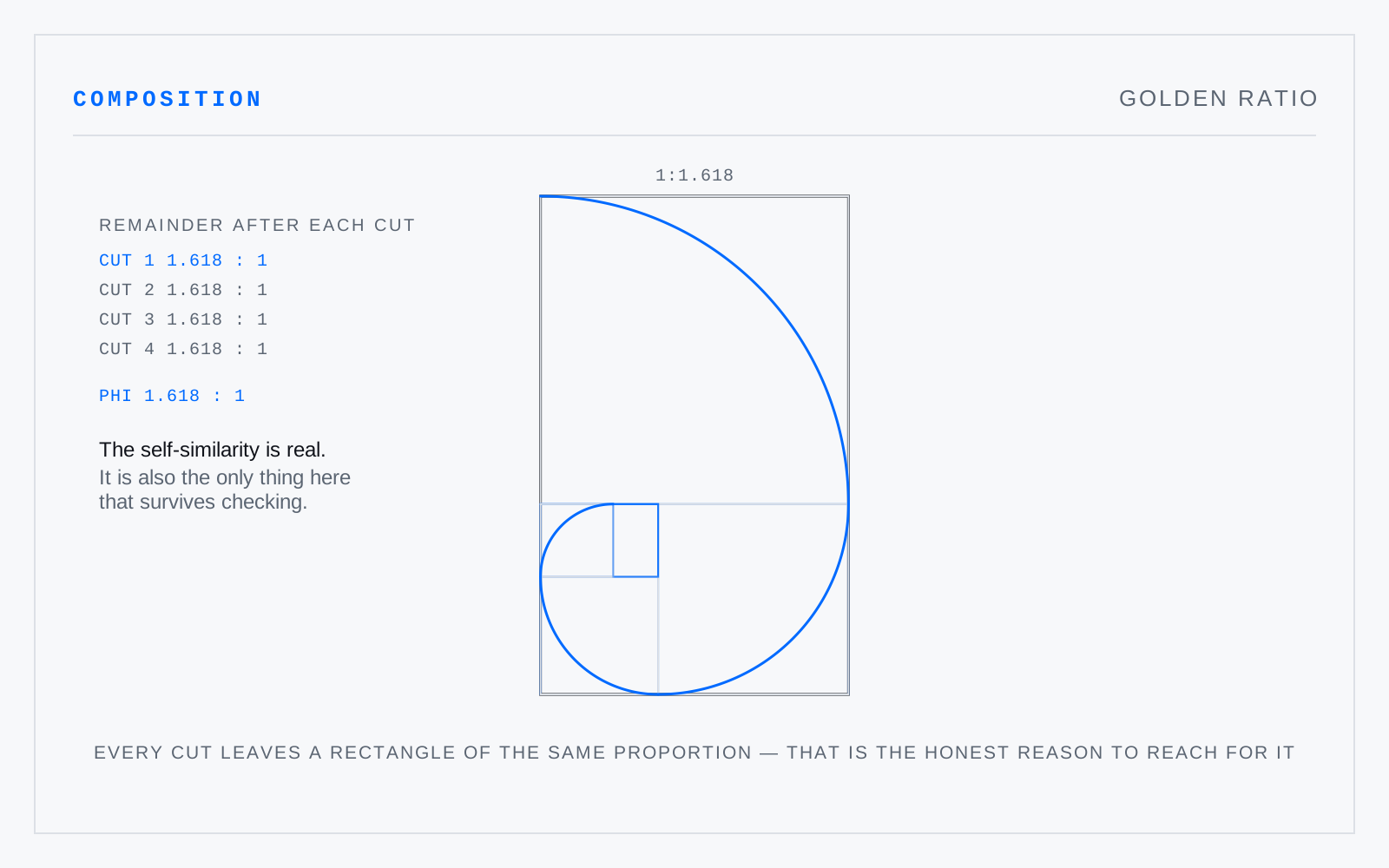
In practice
Its claimed ubiquity is retrofitted. The Parthenon doesn't measure to phi unless you choose the endpoints to suit, the nautilus isn't a golden spiral, and no study shows viewers prefer it.
Not to be confused with
- Rule of thirdsA convention placing the frame's divisions at one-third and two-thirds on each axis and subjects near the four intersections. It is a coarse approximation of off-centre placement that happens to be easy to remember and easy to overlay on a viewfinder. No perceptual finding stands behind it.
- ProportionThe relation of one dimension to another — within an element, between elements, or between an element and the whole. Proportion is a ratio and survives resizing; scale does not. A proportional system fixes a small set of allowed ratios so that sizes relate rather than merely differ.
Origin
'Divine proportion' from Pacioli's Divina proportione (1509); 'golden' is nineteenth-century German — goldener Schnitt. Euclid called it only extreme and mean ratio, and claimed nothing for it beyond the geometry.