Design Nomenclature / Composition
Eye path
Also called scanpath, reading path, eye flow, entry point
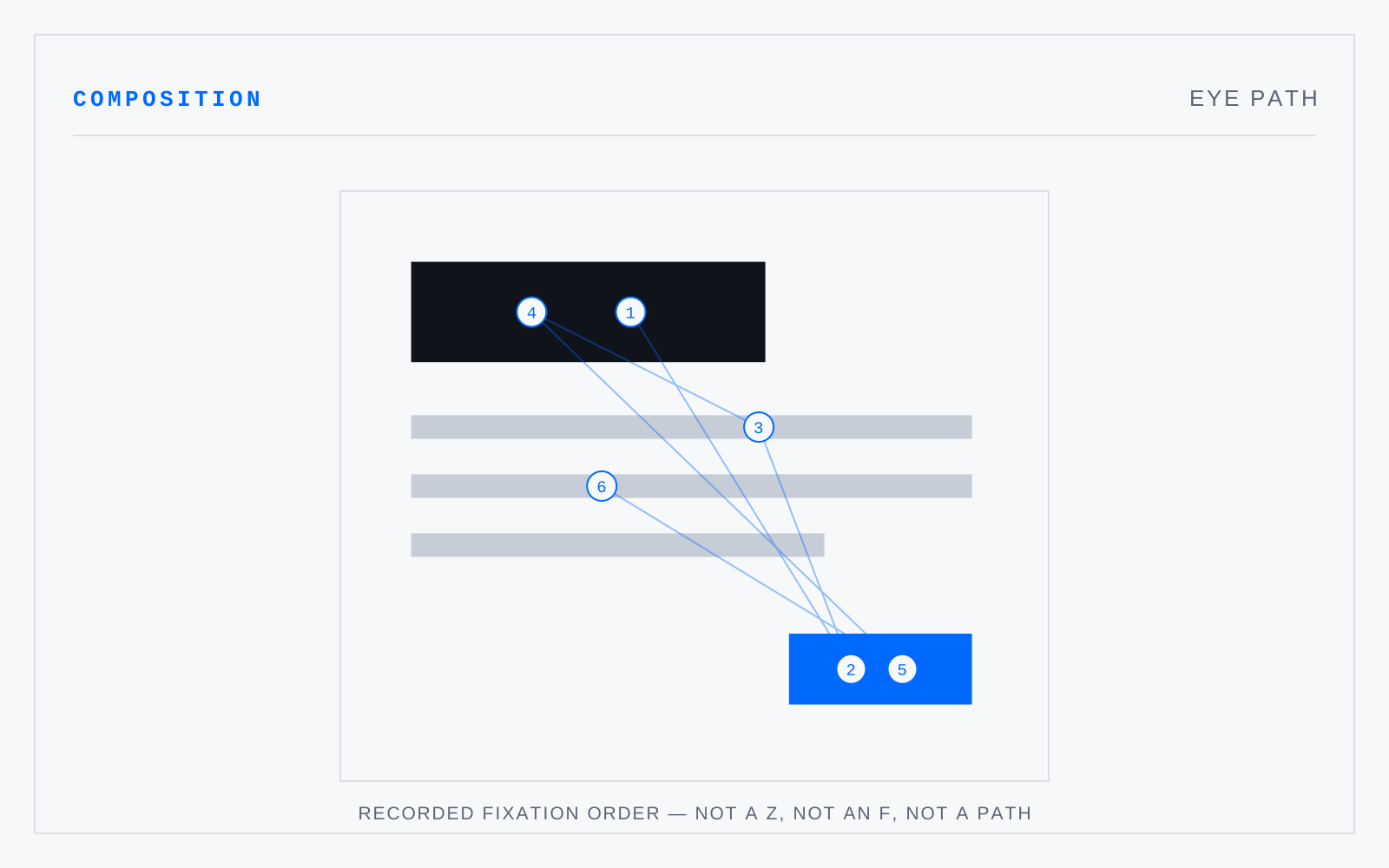
The sequence in which a viewer's fixations land on a composition, driven by weight, alignment, continuation, and habit. The entry point is whatever wins the first fixation. Designers can bias the path but cannot script it — eye-tracking shows routes far less orderly than the arrows in layout diagrams.
In practice
The 'Z pattern' and 'F pattern' are aggregate heatmaps from particular studies, not laws of looking. They describe weak hierarchy; a strong hierarchy overrides them outright.
Not to be confused with
- HierarchyThe ordering of a composition's parts by intended attention, expressed through weight, scale, position, and space. A hierarchy is a claim about what matters, made visible; it works when a viewer can rank the parts without reading them. Each level added weakens every level already there.
- Good continuationElements arranged along a continuous line or smooth curve read as belonging to one another, and the path preferred is the one that changes direction least. Where two contours cross, perception carries each straight through rather than reading a corner and two branches. Smoothness does the grouping, not nearness.