Design Nomenclature / Type
CJK
Also called Chinese Japanese Korean, Han typography, CJKV
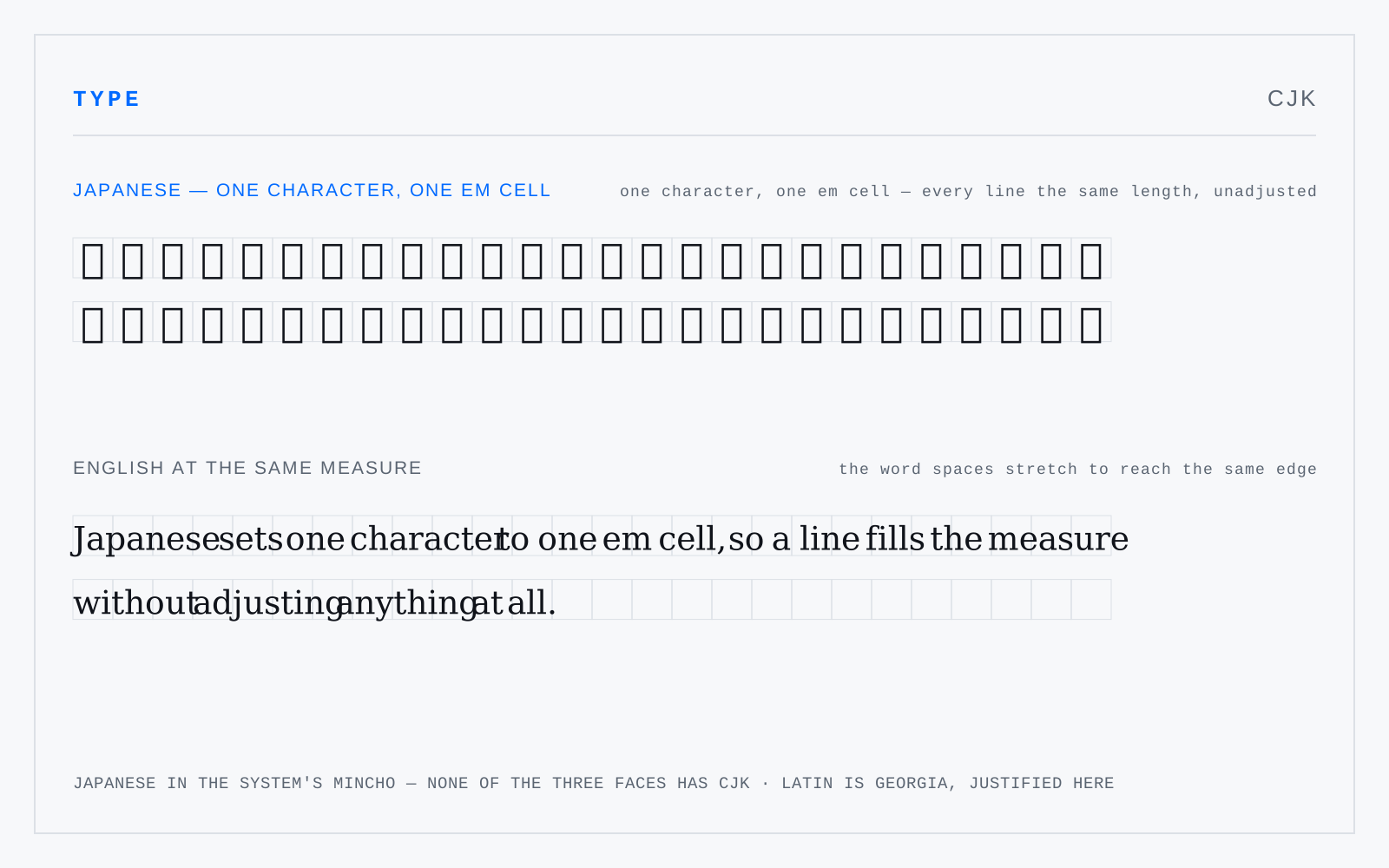
Chinese, Japanese and Korean typesetting. Characters occupy a fixed em square, so text sets to an even grid; there are no word spaces, so lines may break almost anywhere; and a usable font runs to tens of thousands of glyphs, which makes it megabytes and makes unicode-range subsetting mandatory rather than an optimisation.
In practice
Latin habits transfer badly. Justification is nearly free and rivers don't arise; measure is counted in characters per line; and tracking a CJK run breaks the grid the script depends on.
Not to be confused with
- Right-to-leftScripts written right to left — Arabic, Hebrew, Persian, Urdu. Text is stored in logical order and reordered for display by the Unicode bidirectional algorithm (UAX #9), which is where mixed-direction runs go wrong: a Latin product name or a phone number inside an Arabic sentence needs isolation or it will reorder around punctuation.
- UnicameralA script with one case — Arabic, Hebrew, Devanagari, Han, Hangul, Georgian mkhedruli. Most of the world's scripts are. Everything Latin typography does with case must be done another way: emphasis in Arabic can't be small caps, and text-transform: uppercase is a no-op or, worse, wrong.